


Concetti Chiave
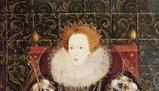
- After Henry VIII's death, Elizabeth Tudor was crowned in 1558, marking a prosperous era due to her modernization efforts and mercantilism-driven economy.
- Elizabeth's reign saw a focus on international trade, utilizing privileged companies and pirates to expand England’s economic influence.
- The Elizabethan era fostered a climate of social peace, enabling the revival of Arts through Humanism and Renaissance, emphasizing classical authors and Greek studies.
- In 1576, London saw the inauguration of its first theatre, "The Globe," which was pivotal in embedding theatre into daily life despite societal reservations.
- The Elizabethan theater thrived, becoming a complex cultural phenomenon, with speculation that Queen Elizabeth might have been behind Shakespeare's works.
Indice
What is the succession to the English throne?
After Henry VIII's death, Edward VI was the new king but he soon died as well, so two candidates were took into consideration for the succession: Mary I Stuart and Elizabeth who was the daughter of Henry VIII and Anne Boleyn.
It was thought, though, that if England had been ruled by the Stuart, it would have risked to be depended to France so the English Parliament, largely Protestant, preferred Elizabeth.
As a matter of fact, in 1558 Elizabeth Tudor was crowned.
The kingdom of Queen Elisabeth was one of the most prosperous periods in English history because she started a modernization process of the country, which favoured a rapid economic growth in all sectors.
In fact, she managed the economy according to the dictates of mercantilism.
Mercantilism was spread in Europe until the XVII century, especially from Louis XVI’s Finance Minister, Jean-Baptiste Colbert.
This fact is important since it shows the strong connection between France and England: English economy was influenced by the French thought but, at the same time political clubs, the masonry and intellectual circles were spread in Paris and its peripheries.
International trade and pirates
An example of that is the fact that International trade was the focus of her development plan: the Crown promoted the privileged companies, especially the ones with a monopoly on the trade in a particular aera, but also made use of pirates, who preyed on Spanish and Portuguese vessels.
She brought stability after years of religious changes to state leaders: the only religious issue she had was with Mary Stuart.
She fled Scotland after trying to reintroduce Catholicism and she took refuge with Elizabeth but in 1587 she was executed because it seems that she plotted against the British government.
Renaissance and humanism in England
Queen Elizabeth’s death was at Richmond upon Thames, the 24th of March 1603 but, during her reign, it was created and favoured a climate of social peace that brought the revival of Arts.
As a matter of fact, during this years, England experimented the richness of the Humanism and Renaissance that were aimed to the rediscovery of classic authors such as Homer, Virgil, Horace, Quintilianus, Cicero and Seneca and of Greek language (for example it was learnt through important teachers like Manuele Crisolora).
The Elizabethan theater
In 1576, the really first theatre of London, called “The Globe”, was inaugurated in the Norden part of the city, in the Shoreditch, while years later other theatres, “Rose” and “Swan”, were also opened in the outskirts because acting was considered sinful and unseemly the society.
Nonetheless, theatre was a connotative element of this period so that day by day it became a complex and full of different facets but also an integral part of citizens' daily life.
It was also thought that behind the pseudonym of William Shakespeare there was Queen Elizabeth, consequentially she would have written all of his works.
Domande da interrogazione
- What were the key factors influencing the succession to the English throne after Henry VIII's death?
- How did Queen Elizabeth I contribute to England's economic growth?
- What role did piracy play in Elizabethan England's international trade strategy?
- How did the Renaissance and humanism manifest in England during Elizabeth I's reign?
After Henry VIII's death, Edward VI became king but died soon after. The succession considered Mary I Stuart and Elizabeth, Henry VIII's daughter with Anne Boleyn. The Protestant English Parliament preferred Elizabeth to avoid dependence on France, leading to her coronation in 1558.
Queen Elizabeth I modernized England's economy by managing it according to mercantilism principles, promoting international trade, and supporting privileged companies with trade monopolies. This approach led to rapid economic growth during her reign.
Under Queen Elizabeth I, piracy was used strategically to prey on Spanish and Portuguese vessels, complementing the Crown's focus on international trade and economic development.
Elizabeth I's reign fostered a climate of social peace that allowed the revival of arts and the flourishing of Renaissance and humanism. This period saw a renewed interest in classical authors and the Greek language, contributing to England's cultural richness.





 Accedi a tutti gli appunti
 Tutor AI: studia meglio e in meno tempo


