


Concetti Chiave
- The 18th century witnessed two pivotal revolutions: the Agrarian and the Industrial Revolution, both marked by technological advancements.
- The Industrial Revolution saw a population boom, driving demand for textiles and leading to the invention of new machinery like the "spinning jenny" and "water frame".
- Advancements in energy sources, such as coal, made goods cheaper and improved transportation, making travel faster and more affordable.
- The Agrarian Revolution involved the enclosure of open fields and advancements in farming techniques, closely linked to the Industrial Revolution.
- Industrial cities emerged, particularly in the South, with "mushroom towns" near factories where harsh conditions prevailed, affecting life expectancy.
18th Century Revolutions
In the end of 18th century there were two important revolutions: The Agrarian and Industrial Revolution.
-Industrial Revolution
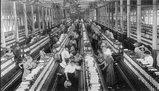
In this period there was a great increase of population, as a result there was a greater demand for clothes. This fact required a more efficient production. So were created new machinery for cloth-making ("spinning jenny" and "water frame"). These machines required the work of one person, while before more people were needed. The steam power wasn't sufficient for these machines, so new sources of energy were used (such as coal). In this way goods became cheaper.
There was development of transport: road became faster and travel became cheaper.
Agrarian Revolution and Social Impacts
The Agrarian revolution was connected to the Industrial revolution., infact both were characterized by technological inventions.
The Agrarian revolution had two forms:
1) the widespread enclosure of open fields and common land to make larger.
2) development of farming techniques.
The industrial cities were in the South. Little cities built near factories were called "mushroom towns". Children and women worked hard and they weren't paid, but they received only a place where sleep. This places were called "workhouses".
The condition was bad and the life expectancy was below twenty years.
Domande da interrogazione
- What were the key technological advancements during the Industrial Revolution, and how did they impact production?
- What were the social impacts of the Industrial Revolution on urban development and labor conditions?
The Industrial Revolution saw the creation of new machinery for cloth-making, such as the "spinning jenny" and "water frame," which increased production efficiency by requiring fewer workers. These advancements, along with the use of new energy sources like coal, made goods cheaper.
The Industrial Revolution led to the growth of industrial cities in the South and the emergence of "mushroom towns" near factories. Labor conditions were harsh, with children and women working hard for minimal compensation, often only receiving a place to sleep in "workhouses," resulting in a life expectancy below twenty years.




 Accedi a tutti gli appunti
 Tutor AI: studia meglio e in meno tempo


