


Concetti Chiave
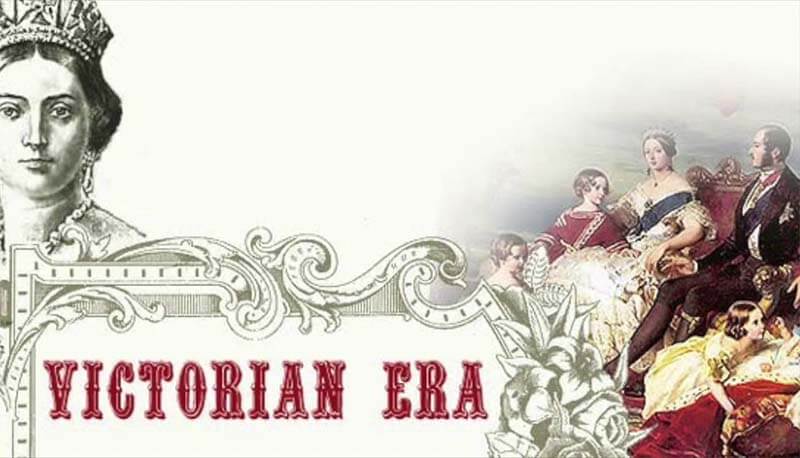
- The Victorian era, named after Queen Victoria's reign (1837-1901), was marked by England's wealth and significant social reforms for workers.
- Despite reforms, the era highlighted stark social class disparities, with many living in urban slums under poor conditions.
- Workhouses, meant to aid poor and orphaned children, were overcrowded and unhealthy, failing to solve poverty issues effectively.
- Prominent thinkers and writers of the time, including Karl Marx and Friedrich Engels, critiqued the dire conditions of the working class.
- Charles Dickens, through novels like "David Copperfield," vividly depicted the harsh realities of the Industrial Revolution's impact on the lower classes.
The Victorian Age: general social aspects
The word "Victorian" derives from queen Victoria, who ruled from 1837 to 1901. In this period England was very rich and powerful and important social reforms for the workers were carried out, like the Mines Act that forbade the employment of women and children in mines. The Emancipation of religious sects, and the Trade Union Act, which legalized the activities of the unions of workers. However there were negative aspects, like the very big difference between the living condition of the various social classes.There was a lot of poor people that lived in urban slums sited in outskirt near the factories, in bad living conditions.
Poor or orphan children and unemployed people, especially because of the effects of Napoleonic wars, famine and the Swing Riots of 1830, moreover, had to live in workhouses, also called poorhouses, where they could work in exchange for food and hospitality.
 Anyway, the conditions of these structures were terrible, overcrowded and unhealthy.
The Parliament tried to resolve the problem but the new Poor Law didn't give a solution. There were only two classes in Britain, rich and poor, that lived next to each other but without communication. For this the Prime minister Benjamin Disraeli defined English society as "the two nations". Such people of different cultural sectors as the philosopher Thomas Carlyle, the economist John Stuart Mill, and the art critic John Ruskin were concerned for the problems of working class. Karl Marx and Friedrich Engels gave life to revolutionary theories. But these communist ideas didn't diffuse themselves very much because England was too capitalist and liberalist.
Charles Dickens’ themes and the example of David Copperfield
Charles Dickens’s fame is linked to some of novels such as: David Copperfield, Oliver Twist, Hard Times, Great expectations and The Christmas Carol.Since his main aim was to describe clearly the awful conditions in which humble people had to live in the years of the Industrial revolution, he was considered the father of social novel.
As a matter of fact, his ability to recreate in his novels vivid daily scenes such as indecorous accommodations where poor but numerous families lived, taverns full of drunk works that want to evade from reality, prisons and damp factories, let social problems to emerge so that they can be reported and change can be wished for.
For example, David Copperfield is about the story of the homonymous child whose father died when he was a newborn and he grew up with his mother and his governess. At a certain point his mother married the strict and violent Mr. Murdstone who did not understand David’s lively temperament.
For this reason he was send to study in a college where life was hard but, at the same time, it was given to him the opportunity to become friend with lot of schoolmates.
After David’s mother’s death the child was obliged by his stepfather to work in a factory in Blackfriars but he managed to escape up to Dover where he was hosted by his aunt. She allowed David to complete his studies, also with the help of the lawyer Wickfield.
In this environment he discovered what love his: firstly he married Dora but she died because of an abortion so he got remarried with Agnes that gave birth to four children.



 Accedi a tutti gli appunti
 Tutor AI: studia meglio e in meno tempo


