


Concetti Chiave
- Henry VIII's early reign was marked by his break with the Catholic Church, establishing himself as the Head of the Church of England through the Act of Supremacy in 1534.
- Edward VI ascended the throne as a child, leading to governance by a council, whereas Mary I, known as "Bloody Mary," sought to restore Catholicism and was opposed for her marriage to King Philip of Spain.
- Elizabeth I, known for her intelligence and determination, maintained religious harmony and successfully defended England against the Spanish Armada in 1588.
- Elizabeth's reign was a period of prosperity and cultural flourishing, with significant contributions to literature, including the works of William Shakespeare.
- Initially a defender of Catholicism, Henry VIII's shift to Protestantism was driven by the Pope's refusal to annul his marriage to Catherine of Aragon, leading to his establishment of the Church of England.
Henry VIII's early reign
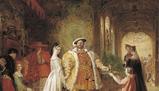
Henry Tudor was crowned King in by his son Henry VIII and was succeeded important periods in English history. Henry VIII was a handsome monarch. He was a fine musician and a writer. He had been married to Catherine of Aragon for twenty years and she had given him a daughter. The King wanted a son and she asked the Pope to allow him to divorce Catherine.as the Pope refused it, Henry broke with the Church of Rome and by the Act of Supremacy (1534) he declared himself Head of the Church of England. Henry then divorced Cathrine and marrried Anne Boleyn. The King closed monasteries and other religious houses, stole church propety, and imprisoned or killed all those who opposed him. Herny VIII had six wives and died in 1547.
Edward VI and Mary I
Edward VI, Henry VIII’s son, was only a child when he became king. So the country was ruled by a concil. Mary I, daughter of Catherine of Aragon, became queen when Edward died in 1553 at the age of fiftteen. She was a strong catholic. Mary’s main object was to restore Catholicism. She was called “Bloody Mary” because she prosecuted and sent to death hundreds of protestant martyrs. The country became allarmed when she married King Philip of Spain. The English hated the idea of a foreign husband. Mary died in 1558.
Elizabeth I's reign
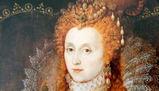
Queen Elizabeth I. Elizbeth was the only child of Henry VIII and his second wife Anne Boleyn. She was twenty-five years old when she became queen in 1558. Elizabeth was an intelligent woman and had inherited her fatehr’s chram determination.
During her reign the Protestant Church secured its position. To this end, the queen managed to keep Catholics and protestants in harmony.
In 1588 King Philip II of Spain sent a fleet of 130 ships, the Invincibile Armada, to envade England. The English fleet, though inferior in number, attacked the armada and, favoured by the wind, damaged the whole Spanish fleet. Only fifty-three vessels retourned to Spain.
Elizabeth's legacy
Both before and after the Armada, Elizabeth encouraged English sailors, like Francis Drake and Walter Releigh to attack and destroy Spanish ships bringing treasures from the new continent. In her long reign, Elizabeth showed herself to be an able queen. She was a real Renaissance monarch. The nation prospered in all directions. Literature flourished and produced its greatest genius, William Shakespeare.
Elizabeth I died in 1603. As she never married she had no children.
Henry VIII's religious shift
Henry VIII as a young king had defended the Church against Martin Luther’s attack, and the Pope had given him the title of defender of the Faith.
Before the end of his reign, however, Henry had become the bitter enemy of the Roman Catholic Church. When the Pope refused to give his permission to divorce Catherine of Aragon, Henry made himself head of the Protestant Church of England.




 Accedi a tutti gli appunti
 Tutor AI: studia meglio e in meno tempo


