


Concetti Chiave
- Mass communication transmits messages through various media, reaching large, diverse audiences quickly and publicly.
- The book was the first mass medium, followed by newspapers, films, radio, and television, evolving with technological advancements.
- The shift to electric and electronic media began in the 19th century, with inventions like the telegraph and telephone reducing communication distances.
- Modern mass media include radio, newspapers, television, and the Internet, with the web being the most versatile and widely used medium today.
- Mass media inform, entertain, preserve cultures, and serve as tools for social or political mobilization, offering news, commentary, and diverse content.
Questo appunto di Inglese riguarda i mezzi di comunicazione di massa, o mass media. A seguire si illustreranno le caratteristiche della comunicazione di massa, si presenteranno i principali mezzi di comunicazione di massa del passato e del presente e si descriveranno le funzioni di questi mezzi di comunicazione.
Indice
Mass communication: definition and characteristics
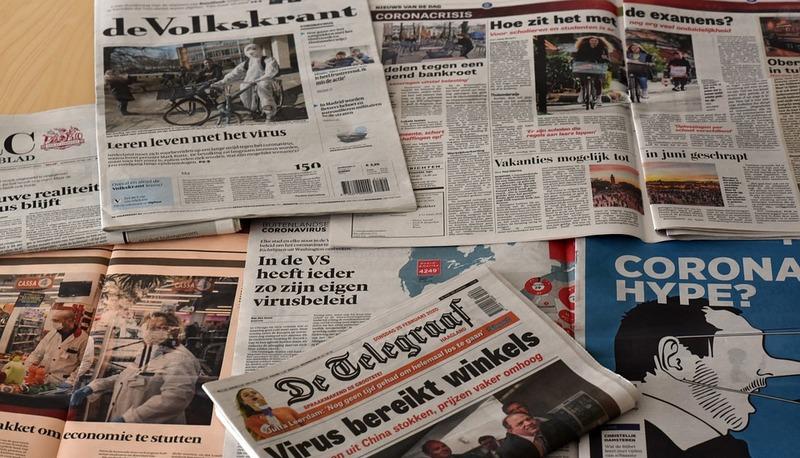
Mass communication is the transmission of messages through television, film, radio, newspapers, books and the Internet. These media are called mass media. One of the main characteristics of mass communication is that it immediately reaches a very large number of people in different places. Unlike other modes of communication, mass communication is public, rapid, and transient. It is public because the messages are not addressed to anyone in particular, but are aimed at everyone; it is rapid because it reaches many people in a short time; and it is transient because it is intended for immediate consumption. The target to be reached is the mass, composed of individuals who do not know each other, but are instead physically distant and united only by the casual fact of paying attention to the same message at the same time. The mass, then, is a large audience, certainly in a numerical sense but mainly in the sense that the communicator cannot personally interact with his or her interlocutors. Moreover, it is a heterogeneous audience, consisting of groups that differ in social status, age, gender, education, ethnicity, religion, and environment.The earliest mass media
The first mass medium of communication was the book. Then, newspapers, films, radio, sound recording, television and, more recently, computer-related telematic media appeared. The first scientific journals emerged in the early seventeenth century. The first gazettes appeared in Amsterdam, Vienna, London and Paris between 1618 and 1631; the first daily newspaper was the “Leipziger Zeitung”, which was founded in Leipzig in 1660. By 1680, the “Frankfurter Journal” was printing 1,500 copies, and in the early eighteenth century newspapers took the form we know, containing readers' letters and the first paid advertisements; but it was not until the nineteenth century that they were transformed from élite reading into reading for everyone. This happened because of the greater number of people that could read and write even among the less wealthy classes, but also because of technical progress in the printing industry that allowed large print runs at low prices. As a result, copies sold daily rose from seven million in 1870 (out of 350 million inhabitants of the “developed” world) to seventy million in 1914 (out of 650 million inhabitants of the same area).The advent of electricity
Around the middle of the nineteenth century a new revolution took place in the world of communication: there was a shift from typographic culture to electric and later electronic media culture. At the end of the seventeenth century, Claude Chappe invented the optical telegraph, which, however, allowed only simple messages to be telegraphed. In 1837, Samuel Morse invented the electric telegraph, and later Guglielmo Marconi invented the wireless telegraph, which in 1895 could send signals over distances of 1,600 meters. However, it was the telephone (developed by Antonio Meucci and later by Alexander Graham Bell) that really eliminated distances between individuals.Modern mass media
Cinema was the great innovation of the late nineteenth century, while the first radio broadcasts were transmitted in 1920 in Pittsburgh in the United States. In Italy, broadcasting programs began in 1924 with great success, as in the rest of the world. After the first experimental television (TV) broadcasts transmitted starting from 1926, the development of networks in Europe took place after World War II and in Italy from 1953. Today, the most important mass media are radio, newspapers, television and the Internet. Radio was the most important mass medium for most of the nineteenth century, but then, "video killed the radio star, pictures came and broke your heart", as the famous song “Video killed the radio star” says. The radio is still an important means of communication, but hearing the news on the radio is different from hearing the news on tv or the web because when you hear news on tv or the web, you can see videos and pictures in addition to hearing sounds. The web is the most popular, important and useful mass medium as it encompasses the functions of the other three media. On the web, you can do a lot of things: you can read newspaper articles, compare news from different websites, chat with friends, meet new people, send and receive emails, video call people that live far away from you, watch films, listen to music and even pay a bill.
Functions of mass media
Mass media performs different functions. First, they provide news about facts and situations occurring in society. Second, they offer commentary, criticism and interpretation on facts and events. Moreover, they provide entertainment, offering spectacles that help reduce tension and stress. Media also represent past or minority cultures, preserving their myths, values and behaviour patterns over time. Finally, they can be useful as tools for mobilization toward political, economic, religious or social goals.Per ulteriori approfondimenti sui mezzi di comunicazione di massa vedi anche qua
Domande da interrogazione
- What are the defining characteristics of mass communication?
- What was the first form of mass media, and how did it evolve over time?
- How did the advent of electricity impact mass communication?
- What role does the Internet play in modern mass media?
- What are the primary functions of mass media?
Mass communication is characterized by its ability to reach a large audience rapidly and transiently. It is public, as messages are aimed at everyone, not specific individuals, and it connects a heterogeneous audience that is physically distant but united by the shared experience of receiving the same message.
The first form of mass media was the book. Over time, it evolved to include newspapers, films, radio, sound recording, television, and eventually computer-related telematic media, each contributing to the expansion and accessibility of information.
The advent of electricity revolutionized mass communication by transitioning from typographic to electric and electronic media. Innovations like the electric telegraph and telephone eliminated distances between individuals, paving the way for modern communication technologies.
The Internet is the most popular and versatile mass medium today, encompassing the functions of radio, newspapers, and television. It allows users to read articles, compare news, communicate with others, watch films, listen to music, and perform various online activities.
Mass media serves several functions: providing news, offering commentary and interpretation, delivering entertainment, preserving cultural values, and acting as a tool for mobilization toward political, economic, religious, or social goals.



 Accedi a tutti gli appunti
 Tutor AI: studia meglio e in meno tempo


