


Concetti Chiave
- Charles Dickens started as a journalist and became a popular novelist, known for his serialized works admired by all levels of Victorian society.
- His natural sense of humour and character creation are central to his novels, with memorable characters and humorous episodes, especially in "The Pickwick Papers".
- He was a keen observer of London life, vividly depicting the city's streets, the lives of the poor, and various societal routines.
- His novels feature a diverse array of characters based on real people, each unique and detailed, without focusing on their spiritual aspects.
- Dickens' characters are not mere archetypes; they showcase individuality and sometimes exaggeration, adding depth to his storytelling.
Charles Dickens' early life and career
C. Dickens (1812-1870) came from a lower middle-class family. He began his career as a journalist but, after the success of his first novel he devoted himself to writing fiction. He published a succession of highly successful novels, usually in monthly instalments, which made him very popular. He was admired at all levels of Victorian society from Queen Victoria herself down. He lived a very intense life. He also worked as an editor, supported important social causes, travelled widely in Europe and in the United States, was an amateur and gave public readings of his works.
Humour and character creation
He is the foremost representative of the Victorian novel. One side of his genius was his natural sense of humour, a quality which has kept alive the characters of his novels up to the present time, when his attacks on the systems of Victorian life have lost their topicality. 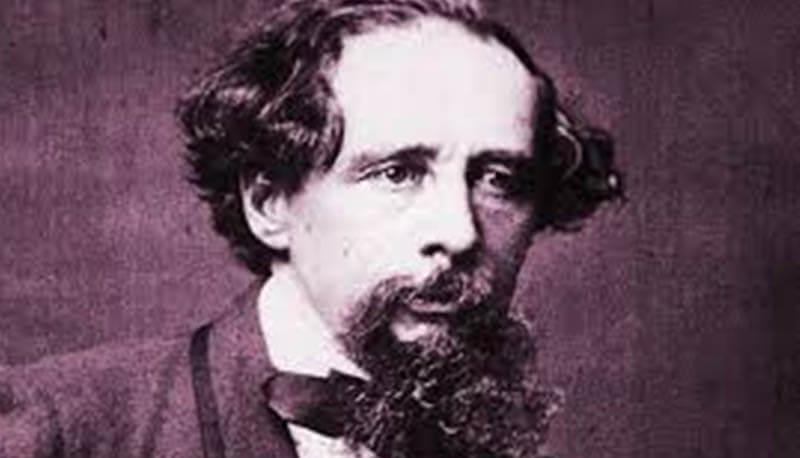 His humour can be found in character drawing, in dialogue and in whole episodes. The sequence of events that we find in his novels, was partly due to their serial form, and it is to be found particularly in his first great comic novel, The Pickwick Papers. Here each episode is pure humour, and Dickens rejoices in his ability to create character after character to put them in funny situations.
Observation of London life
Dickens is a subtle observer of London life, which to know during his wanderings in the town; in his boyhood he long observed streets and squares, particularly in those parts of the town where the poor lived. He knew from personal experience the life led in factories, the routine in the offices, the sordid life in a debtors prison. He gives us a minute description of British home life, of school systems, of the procedure followed in the Law Courts, of the domestic life.
Character diversity and individuality
Dickens' world is inhabited and enlivened by hundreds of characters drawn from the observation of real people. His characters may be roughly divided into good and evil, but he doesn't create types. Each character is unlike the others, each one is an individual. They may sometimes be exaggerated and grotesque. Dickens is not concerned with the spiritual side of his characters; he is an untiring observer of the external qualities of people.
Some of Dickens' novels are defined as



 Accedi a tutti gli appunti
 Tutor AI: studia meglio e in meno tempo


