


Concetti Chiave
- Mary Shelley's upbringing was deeply influenced by her philosopher parents and the intellectual environment, including visits from notable writers like Coleridge and Percy Shelley.
- "Frankenstein" emerged from a literary contest and explores the consequences of Victor Frankenstein's creation of life using corpse parts, leading to tragedy and moral questions.
- The novel reflects influences from contemporary scientific theories, the myth of Prometheus, and philosophical ideas from Rousseau and Locke, positioning the monster as a "noble savage."
- The narrative employs a complex structure of letters and flashbacks, with Walton's correspondence framing the story and emphasizing themes of ambition and the dangers of overreaching.
- The theme of the double is central, with parallels between Walton and Frankenstein, as well as between Frankenstein and his creation, highlighting isolation, ambition, and the quest for forbidden knowledge.
Indice
Childhood and Influences of Mary Shelley
Mary Shelley was born in 1797, she was the daughter of two philosophers, who had been influenced by the ideas of the French Revolution. Ten days after her birth, her mother died, and his father married another woman four years later, and this woman with her daughters were cause of Mary Shelley's sufferings. Her house was always visited by some of the most famous writers of those days,
such as Coleridge and Percy Shelley, and this was very influencing. The latter would become her husband eventually. The couple moved to Lerici, where Percy Shelley died, therefore she moved back to England in 1823 and died in 1851.
Frankenstein: Genesis and Plot
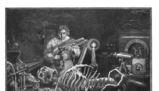
Frankenstein is the result of a literary contest between the Shelleys and their friends in Villa Diodati. Plot: Victor Frankenstein, a Swiss scientist, manages to crate a human being by joining parts of corpses, the result of this experiment is revolting, and the creation becomes a murderer and in the end he destroys his creator. The events are set all over Europe, the most important setting is the North Pole, where Walton and his ships are stuck by the ice and where Frankenstein is found following his creation.
Influences and Themes of Frankenstein
Influences: Mary Godwin was very interested in chemistry, and she knew the latest scientific theories and experiments in the fields of chemistry, electricity and evolutionism, moreover she had a very stimulating background, since her house was visited by many scientists. the monster can be considered Rousseau's bon sauvage, that is to say a man in a primitive estate, so he's not corrupted by civilisation; moreover Locke's influence was very important, indeed the monster is educated by experience, as the reader can notice in the description of the creation's self awareness. The ghost stories read in Villa Diodati was an immediate stimulus, even if Frankenstein differs from the Gothic tradition, since it is not set in a dark castle. Another influence is the myth of Prometheus, who was a giant who stole the fire from the Gods in order to give it to men, he was an overreacher, he challenged the divine and freed men from gods' power. Victor himself is an overreacher, he challenges death. Her sense of guilt for her mother's death is an influence, since she wants to challenge physical death. The settings are influenced by her trips to Switzerland, where the landscapes are sublime.
Narrative Structure and Themes of the Double
Narrative structure: The events are not told chronologically and are introduced by the letters of Walton, a young explorer on the north pole, to his sister Margaret Saville. The novel is characterised by a Chinese box structure: at first Walton informs her sister of the events, then Frankenstein informs Walton, who informs his sister, and finally the creation writes to Frankenstein and so on, everything has already happened and the story is told through flashbacks. Walton is a traveller who meets Frankenstein at the north pole, which is the symbol of going beyond limits, and their meeting is a warning not to do so, indeed Frankenstein will go back . Theme of the double: Walton is the double of Frankenstein because they both manifest the same ambitions, the wish to overcome human limits, the same wish for loneliness and the same pride for being different. Frankenstein and his creature are complementary: they both suffer from a sense of alienation and isolation, both begin with the desire of being good but become obsessed with
hate and revenge. The themes dealt with the quest for forbidden knowledge, the overreacher, the double, the penetration of nature's secret , the usurpation of the female role, and social prejudices.
Domande da interrogazione
- How did Mary Shelley's early life and family background influence her writing?
- What inspired the creation of "Frankenstein" and what is its basic plot?
- What scientific and philosophical influences are evident in "Frankenstein"?
- How is the narrative structure of "Frankenstein" unique, and what themes does it explore?
- In what ways do the characters of Walton and Frankenstein reflect the theme of the double?
Mary Shelley's upbringing was marked by intellectual stimulation and personal tragedy. Born to philosophers influenced by the French Revolution, she lost her mother shortly after birth and faced challenges with her stepfamily. Her home was frequented by notable writers, including her future husband Percy Shelley, which significantly influenced her literary development.
"Frankenstein" originated from a literary contest at Villa Diodati. The plot follows Victor Frankenstein, a scientist who creates a being from corpse parts. The creature becomes a murderer, ultimately leading to Frankenstein's destruction. The story unfolds across Europe, with a significant setting at the North Pole.
Mary Shelley was influenced by contemporary scientific theories in chemistry, electricity, and evolutionism. Philosophically, Rousseau's concept of the "noble savage" and Locke's ideas on experiential education shaped the monster's character. The myth of Prometheus and Shelley's personal guilt over her mother's death also influenced the narrative.
"Frankenstein" employs a Chinese box narrative structure, with events revealed through Walton's letters to his sister. The novel explores themes such as the quest for forbidden knowledge, the overreacher, the double, and the consequences of surpassing human limits, symbolized by the North Pole setting.
Walton and Frankenstein are doubles, sharing ambitions to transcend human limits, a desire for isolation, and pride in their uniqueness. Both characters, along with Frankenstein's creature, experience alienation and a transformation from benevolence to obsession with revenge, highlighting the theme of the double.




 Accedi a tutti gli appunti
 Tutor AI: studia meglio e in meno tempo


