


Concetti Chiave
- Mary Shelley was educated by her radical parents, Mary Wollstonecraft and William Godwin, who influenced her beliefs in women's rights and social justice.
- Her relationships included influential figures such as Samuel Coleridge and Percy Bysshe Shelley, who became her husband and significantly impacted her life and work.
- Shelley's interests spanned the limits of civilization, sciences like chemistry and physics, and the French Revolution, reflecting in her writings.
- Frankenstein, inspired by a dream, is notable for its complex narrative structure involving multiple narrators and themes of civilization and corruption.
- The publication of Frankenstein in 1818 was influenced by philosophers like Locke and Coleridge, with themes echoing the myth of Prometheus and the "Rhyme of the Ancient Mariner."
Indice
Education and Family Influences
She was educated by her parents, who were both radicals and believed in the French revolution:
· Mary Wollstonecraft: she was the first to write a treatise for women's rights, titled ”A vindication of the rights of Women”. She died of childbirth (when Mary Shelley was born)
· William Godwin: he was a philosopher who advocated the need for fair laws and social justice. When his wife died he remarried with another woman, a gesture which upset the young
Mary Shelley.
Friends and Relationships of Mary Shelley
Mary Shelley’s father had two friends who were philosophers as well:
· Samuel Coleridge, the author of the “Rhyme of the Ancient Mariner”
· Percy Bysshe Shelley: Mary Shelley's future husband
Percy Shelley ran away with Mary Shelley when she was only 17 (he was 6 years older). 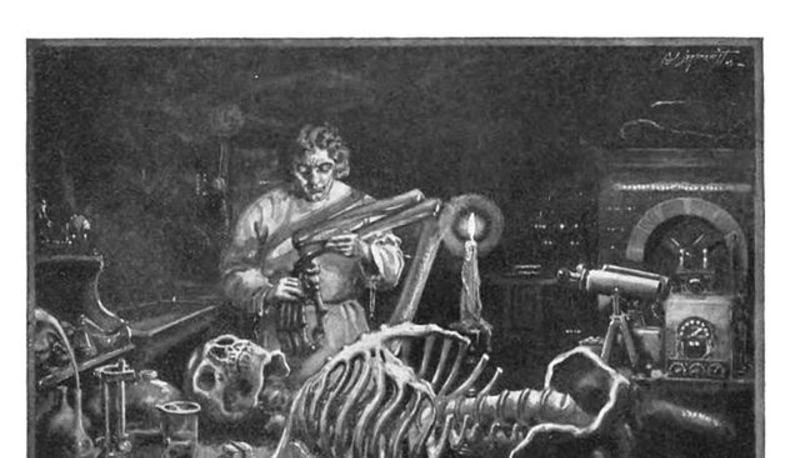 In 1814 Mary lost her baby and in 1815 they went to Switzerland (in Villa Diodati, on Lake Geneva, which was rented by Lord Byron – a charismatic poet).
Interests and Inspirations of Mary Shelley
Mary Shelley was interested in:
1- The limits of civilization
2- Chemistry and Physics
3- Education
4- The French Revolution
5- Philosophy (particularly Rousseau who dealt with the “natural man” and thought that civilization corrupted men)
While Mary Shelley was in Villa Diodati, she had a dream, that became a source of inspiration for Frankenstein. It was an epistolary novel with a unique structure (a story within a story within a story).
There are three narrators: Walton, Frankenstein, the creature.
Publication and Philosophical Influences
The book was finished in 1817 but published in 1818, as an anonymous book (women were not allowed to write at that time).
The philosophers who influenced Mary Shelley’s book were:
· Locke - education, self-awareness
· Coleridge - who dealt with the crime against nature, like Mary Shelley did later; also the Rhyme of the Ancient Mariner is considered to be an inspiration for the character of Walton, because of its "sea voyage" theme
· Myth of Prometheus: he was bound to a rock and every night an eagle ate his liver
Domande da interrogazione
- How did Mary Shelley's family background influence her education and beliefs?
- What role did Mary Shelley's relationships play in her life and work?
- What were the key inspirations and themes in Mary Shelley's "Frankenstein"?
Mary Shelley was educated by her radical parents who supported the French Revolution. Her mother, Mary Wollstonecraft, was a pioneering advocate for women's rights, while her father, William Godwin, was a philosopher focused on fair laws and social justice. These influences shaped her intellectual development and interests.
Mary Shelley's relationships significantly impacted her life and work. Her father’s friends included philosophers like Samuel Coleridge and Percy Bysshe Shelley, the latter becoming her husband. Her elopement with Percy at 17 and their time in Switzerland with Lord Byron were pivotal, inspiring her to write "Frankenstein."
"Frankenstein" was inspired by Mary Shelley's interests in the limits of civilization, science, and philosophy, particularly Rousseau's ideas on the "natural man." Her dream at Villa Diodati and influences from philosophers like Locke and Coleridge, as well as the myth of Prometheus, shaped the novel's themes and structure.



 Accedi a tutti gli appunti
 Tutor AI: studia meglio e in meno tempo


