


Concetti Chiave
- Oscar Wilde's aesthetic movement peaked with his influence from Walter Pater during his time at Magdalen College, Oxford.
- Initially gaining attention through flamboyant public appearances, Wilde transitioned to showcasing his wit through writing.
- His literary works include charming tales, sophisticated novels like "The Picture of Dorian Gray", and witty comedies such as "The Importance of Being Earnest".
- Wilde's legal battle over accusations of homosexuality led to a prison sentence, which deeply affected his career and life.
- His imprisonment inspired profound works like "The Ballad of Reading Gaol" and "De Profundis", yet his final years were marked by decline and solitude.
(Dublin 1854 - Paris 1900). The aesthetic movement reached its culmination with Oscar Wilde. From his years at Magdalen College, Oxford, he had been influenced by the doctrines of Walter Pater. In 1881 he published his first volume of Poems at his own expense. To secure notoriety and thus increase the sale, he adopted an aesthetic prose, making public appearences in silk knee breeches and with a carnation in his hand.
The literary career of Wilde
Soon, however, he gave up this form of self-advertisement, and tried to win the public by the brillance of his wit rather than by the extravagance of his attitudes. Having taken to journalistic work to make a living, he wrote, at the same time, delightful tales collected under the titles of "The Happy Prince and Other Stories" (1888) and "A House of Pomegranates" (1891), sophisticated novels such as "The Picture of Dorian Gray" (1891), essays on art, published in one volume as "Intentions" (1891), and an erotic drama in French, "Salomé" (1893).
But he showed his sparkling wit principally in a series of comedies, dealing sarcastically with the London society, "Lady Windermere's Fan" (acted 1892), "A Woman of No Importance" (acted 1893), "The Importance of Being Earnest" (acted 1895) and "An Ideal Husband" (acted 1895).
The decline and imprisonment
Then he instituted a legal action against the Marquis of Queensbury who had accused him of homosexuality. 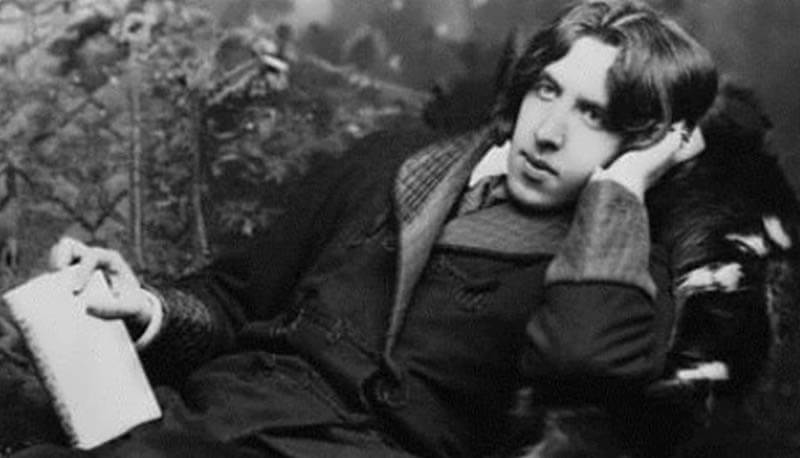 Wilde was at the heigh of his fame for his brillant plays. The accusation was well grounded and Wilde was sentenced to two years of hard labour at Reading Gaol (1895-1897). His imprisonment was a disaster for the theatre in which he had made such a brillant start, but the sense of social disgrace, and the trying perioid he spent in jail, gave his emotional depth and allowed him to produce "The Ballad of Reading Gaol", a poem of poignant intensity, and "De Profundis" (1895), an apology of his life. His last years were cheerless and unproductive. He wandered in France and Italy, and died on 30 November, 1900.
Domande da interrogazione
- How did Oscar Wilde initially gain public attention and what change did he make in his approach?
- What are some of the notable works Oscar Wilde produced during his literary career?
- What impact did Wilde's imprisonment have on his life and work?
Oscar Wilde initially gained public attention through self-advertisement, adopting an aesthetic prose and making public appearances in extravagant attire. He later shifted his approach to focus on the brilliance of his wit rather than extravagant attitudes.
Oscar Wilde produced a variety of notable works including "The Happy Prince and Other Stories" (1888), "A House of Pomegranates" (1891), "The Picture of Dorian Gray" (1891), "Intentions" (1891), "Salomé" (1893), and comedies like "Lady Windermere's Fan" (1892), "A Woman of No Importance" (1893), "The Importance of Being Earnest" (1895), and "An Ideal Husband" (1895).
Wilde's imprisonment was a disaster for his theatrical career, leading to social disgrace and emotional depth. It inspired him to write "The Ballad of Reading Gaol" and "De Profundis," but his last years were marked by cheerlessness and lack of productivity.



 Accedi a tutti gli appunti
 Tutor AI: studia meglio e in meno tempo


