


Concetti Chiave
- King John ruled despotically, imposing numerous taxes to raise money, which led to widespread discontent.
- John's attempt to appoint bishops without papal consent resulted in his excommunication and a ban on ceremonies in England.
- Nobles, having lost possessions in France, sought John's aid, but his refusal led them to withhold tax payments.
- Common people were also heavily taxed and threatened by King John's policies, increasing general unrest.
- The Magna Carta, signed in 1215, ensured the king would consult on financial decisions and upheld the right to legal trials, forming a foundation for Western democracy.
The Rise of Giovanni
After his death Richard was succeeded by his brother John, who began to reign despotically trying to earn money by imposing several taxes.
Besides that, he wanted to appoint bishops and archbishops without the consent of the Pope, who excommunicated him and forbade all the ceremonies in England. But clergy were not the only ones to be exposed to his abuse of power: in fact nobles, who had lost all their possession in France, asked king John for help, but he refused to help them, so they decided not to pay taxes anymore.
Last but not least, common people were threatened and forced to pay the taxes that the king imposed.
The Magna Carta
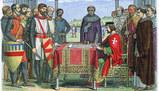
For all the above reasons, in June 1215, clergy, nobles and common people joined together at Runnymede and forced the king to sign the Magna Carta: it established that the king was to ask for advice about how to spend and earn money with war and taxes. In addition, the king couldn’t sentence people without legal trials and witnesses.
In the end, the Magna Carta undoubtedly represents one of the first examples occidental democracy is built upon.
Domande da interrogazione
- What actions led to King John's excommunication by the Pope?
- How did King John's rule affect the nobles and common people in England?
- What was the significance of the Magna Carta signed in 1215?
King John attempted to appoint bishops and archbishops without the Pope's consent, leading to his excommunication and a ban on ceremonies in England.
King John's refusal to assist nobles who lost possessions in France and his imposition of heavy taxes on common people led to widespread dissatisfaction and resistance, including a refusal by nobles to pay taxes.
The Magna Carta, signed at Runnymede, was significant as it required the king to consult on financial matters and ensured legal trials and witnesses, laying a foundation for Western democracy.



 Accedi a tutti gli appunti
 Tutor AI: studia meglio e in meno tempo


