


Concetti Chiave
- Oscar Wilde's intellectual upbringing, including his education at Trinity College and Oxford, influenced his wit and public persona as a dandy.
- Wilde's novel is an adaptation of a short story, reflecting the Faustian myth with Dorian Gray trading his soul for eternal youth.
- The plot involves Dorian's moral decline, his murder of Basil Hallward, and eventual suicide when he destroys his portrait.
- Main themes include the duality of life, mystery, horror, and the cult of beauty, highlighting the consequences of excess.
- Despite initially claiming the novel lacked a moral, Wilde later acknowledged the inevitability of paying for a life of excess.
Indice
The Intellectual Environment of Oscar Wilde
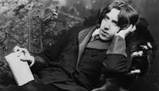
Oscar Wilde was raised in a racy intellectual environment that contributed to his wit and cleverness, he was enrolled in the Trinity College, where he exhibited a deep interest in Greek and he was even awarded a scholarship to Oxford. He came in touch with John Ruskin and Walter Pater, thanks to whom he started approaching the philosophy of aesthetism. In 1881 his very first collection of poems was published and controversy spread around the figure of Oscar Wilde, whose unconventionality depicted him as a dandy, he was even offered a lecturing in the USA. A dandy places particular importance to physical appearance, refined language and leisurely hobbies. He filled his works with wit and sarcasm displaying the vices of the upper classes in his "Comedies of Manners": they reveal around characters with a disgraceful past that face the hypocrisy of society.
His popularity faded ad the father of another young poet, named
The Novel and the Myth of Faust
The novel is an extended version of a long short story printed in an American magazine, to adapt it, Wilde had to widen the plot, increase the number of characters and mitigate all the homosexual implications. The plot mirrors the myth of Faust, with a young man, giving up his save for eternal youth, in this case Dorian whose portray is being printed by his friend Basil Hallward. Dorian is persuaded by lord Henry Wotton of the priceless value of youth, his wish for eternal youth is then granted as the picture slowly transforms into an old wrinkled man, Dorian hides it in the attic and he even kills Basil in order to hide his secret. At the end Dorian surrenders and stabs the portrait, which causes his own suicide.
Main Themes of the Novel
The main themes are:
• Double life, where the dualism is represented with Dorian and the picture
• Mystery and horror
• Cult of beauty
Domande da interrogazione
- How did Oscar Wilde's intellectual environment influence his work and public persona?
- How does Wilde's novel relate to the myth of Faust, and what changes were made for its publication?
- What are the main themes of Wilde's novel, and how do they reflect his views on morality?
Oscar Wilde was raised in a vibrant intellectual environment, attending Trinity College and later Oxford, where he was influenced by figures like John Ruskin and Walter Pater. This background contributed to his wit and cleverness, shaping his public persona as a dandy and his works filled with wit and sarcasm, often critiquing the upper classes.
Wilde's novel mirrors the myth of Faust, with the protagonist Dorian Gray trading his soul for eternal youth. For publication, Wilde expanded the plot, added characters, and toned down homosexual implications. The story follows Dorian's descent into moral decay, culminating in his suicide when he destroys his portrait.
The main themes of the novel include duality, mystery, horror, and the cult of beauty. Despite Wilde's claim of no moral in the Preface, he later suggests in "The Profundis" that a life of excess has inevitable consequences, reflecting a deeper moral undertone in the narrative.



 Accedi a tutti gli appunti
 Tutor AI: studia meglio e in meno tempo


