


Concetti Chiave
- Keats advocated for the cult of beauty, highlighting the immortality of art versus human mortality, influencing the Pre-Raphaelites and Swinburne.
- Baudelaire explored the dark side of human experience, impacting Wilde and emphasizing irrationality, as seen in his translations of Poe's works.
- Ruskin opposed Victorian materialism, viewing art as an expression of spirit and influencing Wilde's political and aesthetic ideas.
- Wilde's concept of the artist combined Keats's model of beauty with dandyism, focusing on personal elegance and perfection.
- French Symbolism, with figures like Gautier and Baudelaire, promoted "art for art's sake," opposing utilitarian views and rejecting moral or didactic purposes.
Keats and the Cult of Beauty
The most significant forerunner of aestheticism was Keats with his cult of beauty and his awareness of the contrast beetween art and life: art is immortal, instead humans are mortal.
Pre-raphaelites were poets who took inspiration from poets who lived before Raffaello. They thought that art had to be spontaneus and spiritual.
Swinburne was influenced by Gautier and Baudelaire, he infact believed in the important of beauty. He also believed that art had not to be a purpose.
Baudelaire and the Darkness of Experience
Baudelaire, who gave important to the dark side of experience, expecially to vicious, strong influenced Wilde as we can see in Dorian Gray, in fact Dorian takes drugs and goes out at night. Baudelaire has also translated E. A. Poe’s works. Poe wrote many horror stories, so he emphasized the irrational part of human mind.
Pater is the father of English aesthetics. His main ideas were:
• life is meant as a work of art;
• the finest sensations are to be found in art;
• in art, form and matter are indistinguishable;
• art is autonomy and hasn’t moral implications.
Ruskin and the Expression of the Spirit
Ruskin was against the indifference of the materialist victorian society to art and beauty. He also thinks that a work of art is an expression of spirit. This thought is the opposite of the utilitarian’s one.
Wilde attended Ruskin’s and Pater’s lectures. In particular Ruskin influenced Wilde’s political ideas, instead Pater influenced Wilde’s aesthetic ideas.
From Flaubert he took the idea of stylistic perfection. Flaubert also thought that the artist hasn’t to reveal itself.
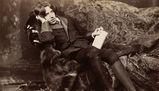
Wilde’s model of the artist was based on Keats’s model: a genius, who is beauty and who has an early dead. Wilde has also created the figure of dandy. Dandyism is the study of person elegance, the search for perfection in all the things.
French Symbolism and Art for Art's Sake
Wilde was also influenced by French symbolism, originated in France in the end of 1800s with Gautier and Baudelaire. Symbolism reflected the sense of frustration and uncertainty of the artists. [It opposed the utilitarian view, which demanded of art a moral emphasis and declared that art should serve no religious, social or moral end.] Instead art has to be for art safe (as Gautier said Art for art’s sake), so art shouldn’t have a didattic purpose, a role, it doesn’t have a massage. Art is in itself.
Domande da interrogazione
- How did Keats influence the aesthetic movement with his views on art and beauty?
Keats was a significant forerunner of aestheticism, emphasizing the cult of beauty and the contrast between the immortality of art and the mortality of humans. His ideas inspired the Pre-Raphaelites, who valued spontaneity and spirituality in art.



 Accedi a tutti gli appunti
 Tutor AI: studia meglio e in meno tempo


