


Concetti Chiave
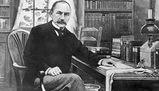
- Thomas Hardy was born in 1840 in the Southwest of England and initially pursued a career in architecture before becoming an author.
- Hardy wrote 15 novels, with "Far from the Madding Crowd," "Help the dark," and "Tess of the D’Urbervilles" being some of his most notable works.
- Themes in Hardy's novels often explore love as a negative force and nature as an indifferent character, reflecting his influences from Darwin and Schopenhauer.
- Unlike Wordsworth, Hardy's view of nature was more pessimistic, portraying it as indifferent and hostile due to his disbelief in divine intervention.
- "Tess of the D’Urbervilles" follows Tess's tragic life, highlighting themes of social class, fate, and the struggles against societal and personal constraints.
Thomas Hardy's early life
Thomas Hardy was born in 1840 in the SouthWest of England. He studied until the age of 16 and his interest turned to architecture. He moved to London where he worked as an architect while he began to write. He has written 15 novels and most important novels are “Far from the Madding Crowd”, “Help the dark” and “Tess of the D’Urbervilles” that scandalized Victorian public opinion with its immorality and pessimism.
Themes in Hardy's novels
In his novels the themes are based on love and nature. He considered love a negative feeling which caused failure and disillusion while nature appears as an important character and his love for nature is reflected particulary in his use of metaphor, similitude and personification. Nature si indifferent to man who fights unsuccessfully. Unlike Wordsworth man and nature were different but both inseparable parts of a universe created by a higher power. Nature was a friend, from her man could learn virtue and wisdom that could give joy only being contemplated. Nature is a source of inspiration; nature was important beacuse it rewarded man and it was seen as something positive. On the contrary Hardy influenced by Darwin and Schopenhauer, denied the existence of God so man is a product of a process of evolution, he doesn’t have free will, he can’t choose or shape his destiny. There is no God but a sort of immanent will which is hostile and indifferent to man’s sufferings.
Plot of Tess of the D’Urbervilles
At the beginning of the novels Tess’s father finds out he is a descendent of the D’Urbervilles, a rich and aristocratic family. His family has already fallen on hard times and so Tess decided to start working on the estate of D’Urbervilles. She is seduced by her master Alec and when she returns to her village she gives birth to a child but he soon dies. After that she left her father’s house and she went to work in a farm. There he met Angel Clare, they fell in love and murry but when Tess told him about her past, he left and went to Brazil. Tess undergoes suffering and she decided to become Alec’s mistress. Angel comes back and forgives Tess who in despair kills Alec and flees with Angel. She is captured at Stonehenge while she is sleeping on a large stone.
Domande da interrogazione
- How did Thomas Hardy's novel "Tess of the D’Urbervilles" challenge Victorian society?
"Tess of the D’Urbervilles" scandalized Victorian society with its themes of immorality and pessimism. The novel tells the story of Tess, who suffers seduction, loss, and societal judgment, ultimately leading to her tragic downfall. Hardy's portrayal of Tess's struggles and the critique of societal norms challenged the moral values of the time.





 Accedi a tutti gli appunti
 Tutor AI: studia meglio e in meno tempo


