


Concetti Chiave
- Thomas Hardy was significantly influenced by philosophers like Comte, Mill, and Darwin, which shaped his deterministic worldview and literary themes.
- Hardy's deterministic perspective suggests that human destiny is controlled by an indifferent fate, influenced by Greek tragedies and Darwin's theories, leading him to reject conventional religious beliefs.
- Wessex, the setting for many of Hardy's novels, is a fictional representation of south-west England, where he effectively uses nature as a symbolic co-protagonist.
- Hardy employs a realistic yet symbolic language, utilizing vivid imagery, metaphors, and cinematic techniques to enhance his storytelling.
- "Tess of the D'Ubervilles" explores themes of societal change, fate, and survival, portraying Tess as a victim of both societal and circumstantial forces.
Indice
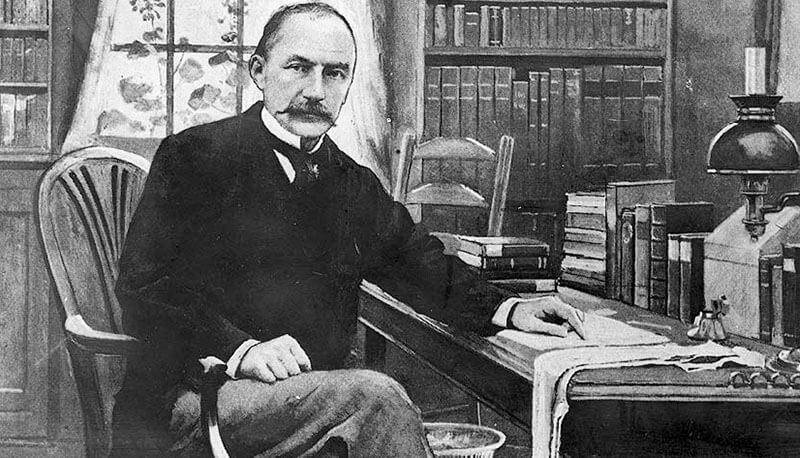
Thomas Hardy's early influences
Thomas Hardy was born of humble parents. He loves music and dancing. He also read the works of Comte, Mill, Darwin, Schopenhuer which helped shape his though. His most important novels are:
- “Far from the madding crowd”
- “Tess of D’Ubervilles”
Deterministic worldview
Hardy’s deterministic view: his considerations about life, death and man express a deterministic view; men can’t do anything to change hi destiny, that is dominated by an indifferent fate. He was influenced by classical and contemporary author; in fact in Greek tragedy there was the notion of cruel Gods, indifferent Nature and hostile Fate. After the reading of Darwin’s theory about the Origin of Species he denies the existence of God. He could see no intelligent direction of the universe, only the control of “insensible chance” over everything. However he feels the importance of altruism through cooperation and loving kindness, and the application of scientific knowledge. He read the Bible and use a lot of examples from it.
Wessex and its significance
Hardy’s Wessex: He sets his stories in a small area in the south-west corner of England called Wessex during the old Saxon kingdom. Thomas Hardy has a superb sense of place and he knows very well the country traditions. The rustic group in a Hardy novel often performs in a way similar to that of the chorus in Greek tragedy; the comments on action of the central characters.
Main themes and characterization:
- Nature: indifferent, growth decay regeneration (cycle of seasons). The nature is co-protagonist with the characters.
- Exposure of Victorian Society denunciation
- Religion: he didn’t believe that christian religion could help person to find their personality and save.
- Difficulty of comunication
- The hobble of being alive; the difficulty of being alive, the suffering of the man.
He uses a realistic language but also symbolic, full of details. He uses similes, metaphors and personifications. The sense of sight is particularly strong colour linked to emotions. He says that “A novel is an impression, not an argument” and it underline the influence of the Imperessionists.
Characters are presented through their experiences and reaction to events. He used an omniscient obstrusive narrator; in his description of scenes in a first time he describes the country side and he gradually pay attention to the characters cinematic techniques (camera eye and zoom).
Plot of Tess of the D'Ubervilles
The novel Tess of the D'Ubervilles is set in the country of Dorset, in the south of England, that Hardy calls Wessex. Et the beginning of the novel Tess’s father find out he is a descendant of a rich and aristocratic family, the D’Urbervilles. His family has already fallen on hard times and the situation gets worse when their horse dies. Tess is convinced to start working as a poultry maid on the D’Urbervilles estate. She is seduced by her master, Alec, and finds herself pregnant. She come back to her village and gives birth to a baby boy who dies soon after. She lives her father’s house and goes to a distant valley to work as a milk maid in a farm. There she meets Angel, a clergyman’s son who is interested in a new farming methods. They fall in love and they get married. But when Tess tells Angel about her past he leaves her and goes to Brazil. Tess undergoes suffering and hardships and accepts to became Alec’s mistress. Angel comes back, find her, they kills Alec and flees together. She is captured at Stonehenge while is sleeping and he is executed.

The novel Tess of the D'Ubervilles is set in Wessex, therefore the setting is partly real and partly symbolical. One of the main themes is the destruction of the english peasantry due to the extension of capitalist farming. The old rhythms of country life that he described in “Far from madding crowd” were being destroyed by mechanization.
Thomas Hardy presented Tess as a victim insisting on her natural goodness. She embodies the qualities of affection and trust, the powers of suffering and survival, beauty, innocence and vulnerability. Not only society but also chance conspire against Tess. At the beginning the novel Tess of the D'Ubervilles wasn’t so well received by the public because it was considered as a scandal.
Domande da interrogazione
- What were some of Thomas Hardy's early influences that shaped his worldview?
- How does Hardy's deterministic view manifest in his writing?
- What role does Wessex play in Hardy's novels?
- What are the main themes explored in Hardy's works?
- How is Tess portrayed in "Tess of the D'Ubervilles," and what themes does the novel address?
Thomas Hardy was influenced by the works of Comte, Mill, Darwin, and Schopenhauer, which helped shape his deterministic worldview. He also read the Bible and incorporated examples from it into his work.
Hardy's deterministic view is evident in his belief that men cannot change their destiny, which is dominated by an indifferent fate. This perspective was influenced by Greek tragedy and Darwin's theory, leading him to deny the existence of God and see the universe as controlled by "insensible chance."
Wessex, a small area in the south-west of England, serves as the setting for Hardy's stories. It is depicted with a superb sense of place, and the rustic groups often act like the chorus in Greek tragedy, commenting on the actions of central characters.
Hardy's works explore themes such as the indifference of nature, the exposure and denunciation of Victorian society, the limitations of religion, and the difficulty of communication and existence. His writing style is realistic yet symbolic, using similes, metaphors, and personifications.
Tess is portrayed as a victim with natural goodness, embodying qualities like affection, trust, and vulnerability. The novel addresses themes such as the destruction of the English peasantry due to capitalist farming and the role of society and chance in conspiring against Tess. Initially, the novel was considered scandalous by the public.





 Accedi a tutti gli appunti
 Tutor AI: studia meglio e in meno tempo


