


Concetti Chiave
- The division of classes in the 18th century led to a clear distinction between owners, who paid wages, and workers, who earned them.
- English landlords grew wealthy by exploiting their lands, benefiting from mineral extraction and providing opportunities for tenants.
- The rise of a consumer society in England fueled demand for luxuries and led to demographic shifts towards industrial areas.
- New 'mushroom towns' emerged to accommodate workers near factories, highlighting rapid urban development.
- Industrial cities faced severe living conditions with long work hours, low wages, and a lack of basic public services.
Division of classes
In the second half of the 18th century the nation came to be divided into tow main classes: the owners, or wage-payers, and the workers, or wage-earners.
The difference between rich and poor people.
English landlords became extraordinarily rich thanks to the freedom they had to take advantage from their lands, making money from the minerals extracted from the soil. Doing so, they also provided opportunities for enrichment to those who leased their farms, and the mines and industrial sites around them.
Rise of consumer society
Wealth turned England into a consumer society, so people started demanding ‘luxuries’.
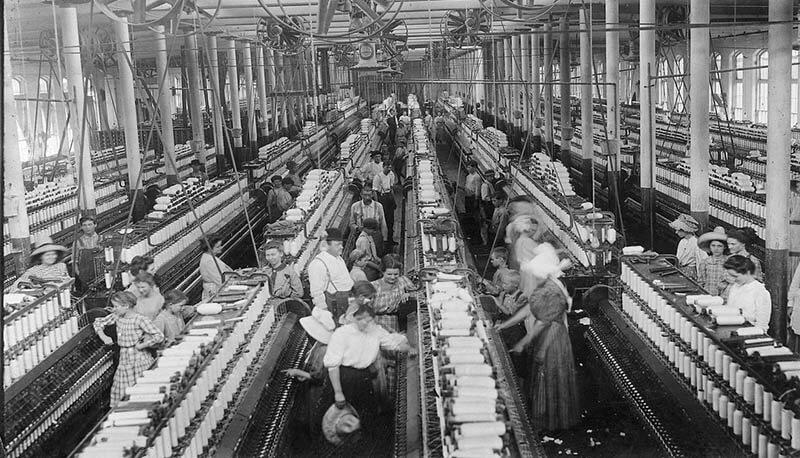
In these years there was a shifting of population from the agricultural and commercial areas of the south to the north and the midlands, where the new factories were built near the coalfields that provided them the fuel.
Small towns, the so-call ‘mushrooms towns’, were constructed to house the workers.
Women and children could be paid less and were easier to control, and children were so small that the could easily move in mines or between the machines to repair them.
The labourers had long working hours, low wages and appalling living conditions.
Industrial cities lacked elementary public services – water-supply, sanitation, street-cleaning, open spaces; the air and the water were polluted, and the houses were overcrowded.
Domande da interrogazione
- What were the main classes in society during the second half of the 18th century?
- What were the working and living conditions like for laborers in industrial cities?
Society was divided into two main classes: the owners or wage-payers, and the workers or wage-earners. This division highlighted the economic disparity between the rich, such as English landlords who profited from land and mineral resources, and the poor workers.
Laborers faced long working hours, low wages, and appalling living conditions. Industrial cities lacked basic public services such as water supply, sanitation, and street-cleaning, leading to pollution and overcrowded housing. Women and children were often employed due to lower wages and ease of control.



 Accedi a tutti gli appunti
 Tutor AI: studia meglio e in meno tempo


