


Concetti Chiave
- The 18th century witnessed significant revolutions, including the agrarian, industrial, American, and French, leading to global ideals of freedom and Britain's transformation into an industrial nation.
- The Industrial Revolution caused population shifts to commercial areas, creating "Mushroom Towns" and employing women and children in poor conditions, contributing to low life expectancy.
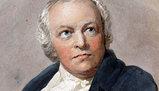
- William Blake, an artist and early Romantic poet, critiqued industrialization's effects, emphasizing imagination over reason and supporting social issues like the abolition of slavery.
- The American Revolution, sparked by taxation disputes, resulted in independence with the Declaration of Independence in 1776, aided by French support and leading to a federal constitution.
- The Gothic Novel emerged at the 18th century's end, aiming to evoke fear with dark settings, supernatural elements, and complex plots, influencing modern horror literature.
Indice
Revolutions of the 18th Century
In the last decades of the 18th century, there were four important revolutions: the agrarian, the industrial, the American and the French (spreading ideals of freedom all over the world). Britain became an industrial country, not like the agrarian that was before. The development was caused by a greater demand of goods of all kind. The industrial revolution implied new sources of power and new inventions, for example the Spinning Jenny and the Water Frame that allowed more women and men to work: these machines were fueled initially with potential energy coming from the water, then, thanks to James Watt, they became fueled with steam coming from coal, in fact new factories were built near coal mines and iron fields, just like South Wales and Scotland, this method was cheaper and decreased unemployment. Roads and waterways were improved. The Agrarian revolution is strictly connected to the industrial ones because they both used technology, for example the enclosures, the crop rotation and breeding improvement.
Social Effects of the Industrial Revolution
There was a shifting of population from agricultural zones to commercial ones, from south to north, the Mushrooms Towns were born to host workers’ houses. Women and children were mostly employed because they could be paid less than men. Unfortunately, they worked in terrible condition, the mines were full of filth and the towns lacked primary services, like public baths, so the life expectancy of the poor people was below 20 years. Due also to hard work (toil) and bad lifestyle. At the beginning of 19th century there were cases of unemployment, thanks to Napoleonic wars.
William Blake and His Artistic Vision
William Blake was born in London, trained as an engraver, he had always been poor. He criticized the bad effects of the Industrial Revolution and was influenced by the ideals of French Revolution. He thought that he was the guardian of spirit of imagination and when his brother died, he became to have visions of him and claimed a unique printing method. As an artist, he was influenced by Michelangelo and Raphael, creating a new kind of artistic representation called “illuminated printing”, which canons were the emphatization of imagination and the union of picture and poetry. As a poet, he was recognized as an early Romantic for his vision, he thought that imagination went over reason. He wrote the Songs of Innocence and Songs Of Experience: the first group of the songs has the childhood as main theme, the language is simple and in a pastoral mode, themes are innocence, happiness, freedom and imagination; the second group was written when the period of Terror in France was at his maximum height: there is a more pessimistic view of life in the SOE, but the two groups should be read together because every theme in a group has his contrary in the other group. As a prophet, Blake wrote the Marriage of Heaven and Hell, where the Hell is a place of energy and liberty, while Heaven a place of lawgiving, this attacks the repression of human energy. With Complementary Opposites Blake explains a vision of live like Eraclitus’ one: the progress and the reality are the result of the continuous fight between the opposites: Peace and War, Love and Hate… in fact they are complementary. Imagination is for Blake an instrument to see over the reason and to know the world, seeing beyond the material reality, this power is typical of the child, the poet and God, which makes them kind of prophets. Blake was interested in social problems, he was a radical thinker, sympathized for the victims of the revolution and supported the abolition of slavery. Blake’s Style is full of symbols and it’s simple, child father and Christ represent innocence, it’s rhythmical.
American Revolution and Independence
When George III came to the throne there was a period of economic stability, the situation collapsed when Britain imposed a tax on importation of tea to the colonies, the Americans answered with the Boston Tea Party in 1773, maintaining that the taxes were unjust, saying “No taxation without representation”. Common Sense in England to support the Americans. The Patriots knew the land and wanted all the Britains out of the colonies, against the Loyalists. The colonies won because the French helped them and on 4th July of 1776 Thomas Jefferson signed the Declaration of Independence, stating that the Colonies were a nation, the rights of life, liberty and happiness and that government could impose them only if the American government agreed. With the Treaty of Versailles then, America adopted a federal constitution, whose president was George Washington.
The Gothic Novel and Its Evolution
The Gothic Novel was a new type of literary genre which gained popularity at the end of the 18th Century and it is the precursor of modern horror stories, the adjective “Gothic” was given by Horace Walpole (The Castle of Otranto) obsessed with this kind of environment; the aim of the Gothic novel was the arouse of fear in the reader, characterized by the end of Enlightment rationality and by the bloody revolutions in America and France. Some example are The Castle of Otranto, The Monk, Frankenstein. The features of the gothic novel are the dark and the gothic castles in the environment, the exaltation of terror and fear, the complex plot, the use of supernatural entities, heroines full of passion and sensible heroes.
Mary Shelley and the Creation of Frankenstein
Mary Shelley was born in 1797, daughter of a feminist and a radical thinker, influenced by the ideals of French Revolution and took part in a small radical group. Then Mary’s mother died and her father married Jane Clairmont, intellectual stimulus was not wanting in Mary. She met Percy Shelley in her house: she married him and they fled to France, where Mary took inspiration of her book from a dream, a nightmare, also because of her romantic stimulus, with her anxieties and uncertainties, then she became writing Frankenstein. Percy died in 1822. Frankenstein is dedicated to Mary’s father and there are her parents’ ideals in it, she sympathizes for the creature also if this could have consequences. She also was influenced by Percy and his love for the science, in fact they followed the various updates of the scientific discoveries of their age, in fact the creature in Frankenstein is formed by pieces of various corpses and the dr. gives him life with a discharge. Physics and Chemistry are bond. The monster can be seen as Rousseau’s natural man, he doesn’t know anything about civilization and society, Frankenstein differs from the other gothic novels by the setting and the absence of supernatural events, Mary took inspiration by the myth of Prometheus.
Narrative and Themes in Frankenstein
There are three different grades of narration in Frankenstein: in the 1st, Walton talks to his sister, in the 2nd Frankenstein talks to Walton and in the 3rd the monster talks to Frankenstein. The themes are the quest for forbidden knowledge, the overreacher, the double (Walton and Frankenstein), the usurpation of female role, the social prejudices and the aknowledge of nature’s secrets.
The Gothic Novel puts its basis on the concept of “sublime”. Scholars have debated this term for centuries, it comes from the latin sub-limis (under the limit) and in literacy and art is used to refer to an expression of elevated feelings. At first, sublime meant same as beautiful, but Joseph Addison said that these nouns are each the opposite of the other. Burke explained that two terms are related to the concept of sublime. Successively, sublime referred to a sensation of astonishment, a state when the soul suspends itself to feel the fear, because of this, void, obscurity, loneliness and silence are related to “sublime”. This “horrible beauty” became the most important feature of the Gothic Novel.
Domande da interrogazione
- What were the key revolutions of the 18th century and their impacts?
- What was William Blake's artistic vision and how did it reflect his views on society?
The 18th century witnessed four major revolutions: the agrarian, industrial, American, and French revolutions. These revolutions spread ideals of freedom globally, transformed Britain into an industrial nation, and led to technological advancements like the Spinning Jenny and Water Frame, which increased employment and improved infrastructure.
William Blake, influenced by the French Revolution, criticized the Industrial Revolution's negative effects and emphasized imagination over reason. He created "illuminated printing" and wrote works like "Songs of Innocence and Experience," highlighting themes of innocence and experience. Blake's art and poetry were filled with symbols and reflected his radical views on social issues and the abolition of slavery.



 Accedi a tutti gli appunti
 Tutor AI: studia meglio e in meno tempo


