


Concetti Chiave
- The First English Revolution was marked by two phases and involved groups like the Levellers and Diggers, challenging wealth distribution and market freedom.
- Cromwell led the army against monarchists, capturing and executing Charles I, later establishing a personal dictatorship despite initially forming a Republican state.
- Montesquieu viewed the First Revolution as a failed attempt at democracy, emphasizing the return to a constitutional monarchy and the power shift to the bourgeoisie.
- Hegel supported revolutions from below, believing in the historical necessity of change when existing structures lose their purpose, contrasting with Montesquieu’s criticism of democracy.
- The revolutionary process involved various perspectives and outcomes, including the rise of Cromwell's dictatorship and the subsequent monarchical restoration by James.
Indice
The First English Revolution
In 600 England was the protagonist of a great experiment divided into two phases: first and second revolution.
1646-49 first English Revolution:
it saw in particular:
Levellers not levelling out wealth, everyone has to make their own wealth.
Diggers communist claim of collective property, political criticism of the market, human degradation caused by market freedom.
Arbitrary political power criticism, criticism of forms of social domination (also for Levellers)
Cromwell and the Personal Dictatorship
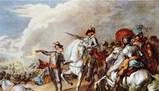
Cromwell main exponent of the army of "model man", but in disagreement with radically democratic ideas that gave too much freedom to the people, according to him I vote only for landowners. He led the army against those who were monarchists. He captured Charles I, had him judged by popular court and had him put to death 19649 first Republican state in that England that we see today under the control of the crown. He then turned it into a personal dictatorship.
Montesquieu and the Second Revolution
Montesquieu supports the second revolution, says that the assassination of the king marks the beginning of the failure of the first revolution. He says it was a beautiful sight to see the efforts of the British to establish democracy. He is considered one of the fathers of modern democracy (he writes the spirit of the laws of 1748), but in this statement he takes up what Lucretius said in De Rerum Natura: whoever safe on the shore sees a ship wrecked not far away feels pain, but also relief to be safe. Montesquieu speaks of the first revolution as a very beautiful spectacle and also speaks of impotent efforts to pierce democracy, but how can he find all this beautiful if he was a democrat? Because that of the first revolution was an extremist democracy; he maintains that one could not fail to return to the constitutional monarchy with James the First, in the state of affairs the substance changes little, but it changes who holds the reins of power, that is, the great bourgeoisie. Locke and Hume also judge the first revolution negatively.
Hegel and the Vision of Revolutions
Hegel, on the other hand, will take a different view as a supporter of revolutions from below; he maintains that when a building empties and loses sense it is right that other forces come to power, it is not surprising that Hegel sees an intrinsic need in history. Unlike Montesquieu, he does not criticise democracy as such, despite what it is, in fact he sees the fragmentation of Germany dominated by the aristocracy of which he is the enemy, and he says that it is even worse than democracy, so every time a popular uprising makes advances against the aristocracy it is a good thing for him. These are all different ways of seeing a revolutionary process that, through different groups (the Diggers and the Levellers in the foreground), tried to dismiss a monarchist power, but then fell into it with the figure of Cromwell, the leader of the so-called New Model, an army, who after having captured King Charles I and established, in 1649, a Republican state, imposed his personal dictatorship, until his death in 1660, followed by the monarchical restoration by James.
Domande da interrogazione
- What were the main ideologies during the First English Revolution?
- How did Cromwell's leadership impact the English political landscape?
- What was Montesquieu's perspective on the First English Revolution?
- How did Hegel's view of revolutions differ from Montesquieu's?
- What was the outcome of Cromwell's rule and its aftermath?
The First English Revolution featured the Levellers, who believed in individual wealth creation, and the Diggers, who advocated for collective property and criticized market freedom and social domination.
Cromwell, disagreeing with radical democratic ideas, led the army against monarchists, executed Charles I, and established a Republican state, which he later turned into a personal dictatorship.
Montesquieu viewed the First English Revolution as a beautiful spectacle but criticized its extremist democracy, advocating for a return to constitutional monarchy, aligning with the views of Locke and Hume.
Hegel supported revolutions from below, seeing them as necessary historical forces, and criticized aristocratic dominance, unlike Montesquieu, who was skeptical of democracy's extremist forms.
Cromwell's rule ended with his death in 1660, leading to the restoration of the monarchy under James, highlighting the cyclical nature of power shifts during the revolutionary period.



 Accedi a tutti gli appunti
 Tutor AI: studia meglio e in meno tempo


