


Concetti Chiave
- Born in Portsmouth in 1812, his father's imprisonment led him to work in a factory, shaping his awareness of child exploitation.
- Despite a poor education, he progressed from working in a law office to becoming a parliamentary reporter.
- As a writer, he exposed the harsh realities of the Victorian Age in works like "A Christmas Carol" and "Oliver Twist."
- His experiences as a reporter highlighted the inefficiencies of the Court of Chancery, symbolized by fog and mud in his narratives.
- His comedic style often involved misunderstandings, as illustrated in the humorous scene with Mrs. Bardell and Mr. Pickwick.
Childhood and Early Work Experiences
He was born in Portsmouth in 1812.
His father went to prison when he was 12, so he had to go to work in a factory and in this way he could understand the misery of poor people especially the problem of exploitation of children.
He had a bad education because he went in a poor school. When he was 16 he has to work in a loyal office, then he became a clerk, then a parliamentary reporter.
Career and Personal Life
He started to write sketches, he became a good journalist.
He married and have a lot of children but then divorced and he married another young girl.
He wrote about poor people, the way they lived. But he didn’t do any action to change this situation: he only wrote.
He shows the misery of Victorian Age in:
- A Christmas carol
- David Copperfield
- Oliver Twist
- Papers of the Pickwick club
Symbolism and Comedy
Fog and mud are here the sombre symbols of the court of Chancery and its procedures.
Dickens had served as reporter in his youth and he had come to know the inefficiency and injustice of this institution.
In the some way as the fog cover the islets and the city, the Court of Chancery is blind and obscure.
Anyway there is a comic side: how people walked, denounce think not
good also if he saw the comic side of this way of living.
The humour of this episode is in the fact that everyone is in good faith:
Mrs. 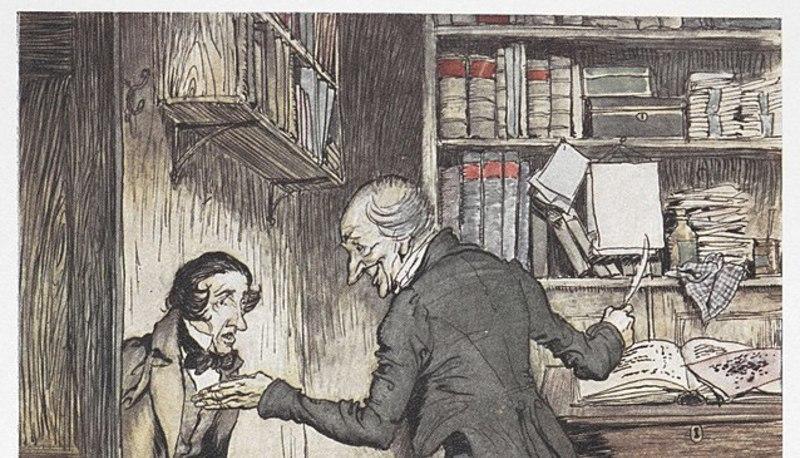 Bardell who has long worshipped Mr. Pickwick, really believes he is proposing to her.
The man is bewildered when she put her arms round his neck.
His 3 friends imagine they’ve interrupted a tender love-scene, and only the reader knows what has really happened.
It’s a misunderstanding based on the incommunicability of the two characters, each following their intention.
Domande da interrogazione
- How did Charles Dickens' early life experiences influence his writing?
- What themes did Dickens explore in his notable works, and how did he portray them?
- How does Dickens incorporate symbolism and comedy in his depiction of the Court of Chancery?
Charles Dickens' early life experiences, such as working in a factory at a young age due to his father's imprisonment, allowed him to understand the misery and exploitation of poor people, particularly children. This understanding is reflected in his writings, which often depict the struggles of the poor during the Victorian Age.
Dickens explored themes of poverty and social injustice in his notable works like "A Christmas Carol," "David Copperfield," and "Oliver Twist." He portrayed the misery of the Victorian Age through vivid storytelling, highlighting the harsh realities faced by the poor, although he did not take direct action to change these situations.
Dickens uses fog and mud as sombre symbols of the inefficiency and injustice of the Court of Chancery, reflecting its blindness and obscurity. Despite this serious portrayal, he also includes a comic side, as seen in the humorous misunderstanding involving Mrs. Bardell and Mr. Pickwick, showcasing the incommunicability and good faith of the characters involved.



 Accedi a tutti gli appunti
 Tutor AI: studia meglio e in meno tempo


