


Concetti Chiave
- Coleridge's life was marked by his early enthusiasm for republican ideals, his struggle with opium addiction, and significant literary collaborations, notably with Wordsworth.
- The "Rime of the Ancient Mariner," "Christabel," and "Kubla Khan" are among Coleridge's most notable works, showcasing his penchant for blending the supernatural with vivid imagery.
- His philosophical journey involved an embrace of German idealism, rejection of republicanism, and a focus on the intersection of the ideal and the real in nature.
- Coleridge distinguished between primary and secondary imagination, emphasizing the latter's role in dissolving and recreating reality through poetic expression.
- His poetic style is characterized by an archaic linguistic approach, a predilection for exotic and medieval themes, and a blend of musicality with elements of mystery and realism.
(1772-1834)
Indice
Life and Influences of Coleridge
He was born in Devonshire in 177 and he study at Cambridge but never graduated. He was influenced by French revolutionary ideal, which made him an enthusiastic republican.
After the disillusionment with the French Revolution he planned to found a community in Pennsylvania under the name of “Pantisocracy” (10 men & 10 Women->communistic community) where every economic activity was done in common and private ownership did not exist; this project will never start. In 1794 he married Sarah Fricker. Domestic difficulties increased because of the chronic rheumatism he suffers from, and he became an opium addict. In 1797 he met Wordsworth.
Main Works and Collaborations
Most of his best poetry belongs to these years:
• THE RIME OF ANCIENT MARINER ->his masterpiece, written in 1798. it is the first poem of the collection Lyrical Ballads.
• CHRISTABEL ->an unfinished poem set in the Middle Ages; written in 1797 but published in 1816. 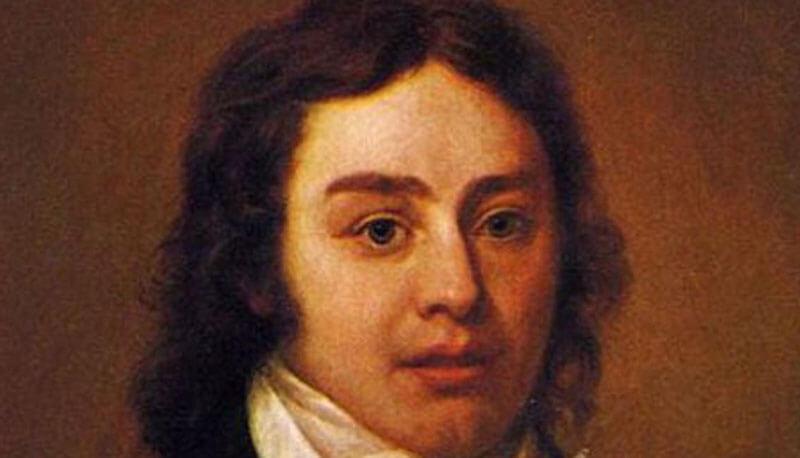 It is about a girl under a witch’s spell.
• KUBLA KHAN ->unfinished, composed under opium’s influence. 54n line fragment written in 1798.
Journey to Germany and Changes
Coleridge went to Germany with Wordsworth, where he read the German idealistic philosophers; after his return he became increasingly conservative and led to a rejection of republicanism. He falls in love for Wordsworth’s sister and he left his wife; after that he entered a period of despair and solitude in Malta.
He returned to England and began career lecturing on literary concerns and in journalism. He read Shakespeare.
Finally he settled in London where he produces Biographia Literaria, a classic text of literary criticism and autobiography.
He died in 1834.
His own task was to write about extraordinary events in a credible way. However unnatural these events may be, they originate from natural elements and for this reason they can be considered real.
IMPORTANCE OF IMAGINATION
Role of Imagination
Like Blake and Wordsworth Coleridge stressed the role of imagination. He distinguished between “primary” and “secondary” imagination.
He described “primary imagination” as a fusion of perception and the human individual power to produce images; “secondary imagination” was something more: “It dissolves, diffuses, dissipates, in order to re-create…”. It was the poetic faculty, which not only gave shape and order to a given world, but built new worlds.
Philosophical View of Nature
Unlike Wordsworth, Coleridge did not view nature as a moral guide or a source of happiness and consolation; his contemplation of nature was always accompanied by awareness of the presence of the ideal in the real.
The material world is nothing but the projection of the “real world of Ideas” on the flux of time (PLATONIC INTERPRETATION).
Coleridge believed that natural images carried abstract meanings and he used them in his most visionary poems.
WORDSWORTH : nature like a source of consolation, happiness, moral guide.
NATURE PANTHEISM->God is nature
COLERIDGE: in nature there is a presence of ideal in the real.
PHILOSOPHICAL view of nature , no pantheism->natura come prodotto di Dio e non
come Dio stesso)
THE LENGUAGE
Language and Poetic Style
An interest in exotic and in medieval period are also evident in some of Coleridge’s poetry. Coleridge used an archaic language, connected to the old ballads, rich in alliteration, repetition and onomatopoeia.
Is made up of seven parts and is set in a boundless sea with a strong sun and a shining moon.
It is introduced by an Argument containing a short summary of the whole poem.
I. In this part the mariner stops a wedding guest and he narrates his tale. He and his fellow mariners reached the line and the Polar Regions after a violent storm. After several days an albatross appeared through and the mariner without any reason killed him. Coleridge makes the shooting of the bird important in two ways:
- He doesn’t say why the mariner kills its (irrationality of the crime)
- This action is again nature and breaks a sacred law of life.
II. The mariner begin to suffer a punishment and Coleridge transfers to the reader the common sensations of guilt. The world which faces the mariner now is dead and terrible, with slimy creatures in the sea and the death-fires which dance at night.
III. This part shows how the mariner’s guilty soul becomes conscious of what he has done and of his isolation from the world. A phantom ship comes closer to the doomed crew and is identified as a skeleton ship. On board Death an Life-in-Death cast dice: the first wins the mariner’s fellow and the second wins the mariner life (lui vive una vita nella morte I suoi amici muoiono)
IV. The guilty of mariner change into auto-consciousness and he re-establish a relationship with the world of nature.
V. This part continues the process of the soul revival. The ship beings to move and celestial spirits stand by the death corpses.
VI. The process of healing seems to be impeded.
VII. In the last stanza mariners gains the wedding guest’s sympathy. Coleridge doesn’t tell the end of the story.
ATMOSPHERE AND CHARACTERS
Atmosphere and Characters
The atmosphere is charged of mystery because of the combination of the supernatural, but also of realism because of the commonplaces and the ordinary actions.
mystery and supernatural
ATMOSPHERE
Realism and ordinary actions
The characters are more types than human beings. When the mariner acts he does so blindly under compulsion.
“THE RIME” AND TRADITIONAL BALLADS
• Musicality
• Four-line stanza
• frequent alliterations and repetitions
• internal rhyme
• the theme of travel and supernatural elements
• MORAL AND DIDACTIC AIM->DIFFERENT FROM A TRADITIONAL BALLAD
INTERPRETATIONS
• Description of a dream
• Allegory of the life of the soul (crime->punishmentredemption)
• Description of the poetic journey of romanticism (didactic aim)
Domande da interrogazione
- What were the key influences on Samuel Taylor Coleridge's early life and career?
- What are some of Coleridge's most notable works, and what themes do they explore?
- How did Coleridge's philosophical views on nature differ from those of Wordsworth?
- How did Coleridge define the role of imagination in his work?
- What stylistic elements characterize Coleridge's poetry, particularly in "The Rime of the Ancient Mariner"?
Coleridge was influenced by the French revolutionary ideals, which initially made him an enthusiastic republican. However, disillusionment with the French Revolution led him to plan a utopian community called "Pantisocracy" in Pennsylvania, which never materialized. His personal life was marked by domestic difficulties and opium addiction.
Coleridge's notable works include "The Rime of the Ancient Mariner," "Christabel," and "Kubla Khan." These works often explore themes of the supernatural, imagination, and the interplay between the real and the ideal, with "The Rime of the Ancient Mariner" being his masterpiece.
Unlike Wordsworth, who saw nature as a moral guide and source of happiness, Coleridge viewed nature through a philosophical lens, seeing it as a projection of the "real world of Ideas" and not as a pantheistic entity. He believed natural images carried abstract meanings.
Coleridge distinguished between "primary" and "secondary" imagination. The primary imagination was a fusion of perception and the human ability to produce images, while the secondary imagination was the poetic faculty that dissolved and recreated to build new worlds, giving shape and order to the existing world.
Coleridge's poetry, especially "The Rime of the Ancient Mariner," is characterized by its archaic language, musicality, use of alliteration, repetition, and internal rhyme. The poem combines elements of mystery and realism, with a moral and didactic aim, differing from traditional ballads.



 Accedi a tutti gli appunti
 Tutor AI: studia meglio e in meno tempo


