


Concetti Chiave
- Samuel Taylor Coleridge was influenced by the French Revolution, planning an unrealized utopian community and struggling with opium addiction due to his health issues.
- Coleridge's collaboration with Wordsworth in Somerset led to the creation of significant works like "The Rime of the Ancient Mariner" and "Kubla Khan".
- He distinguished between primary and secondary imagination, with the latter being consciously used by artists to create new worlds.
- Coleridge's "suspension of disbelief" allowed readers to accept the supernatural as plausible, contrasting Wordsworth's approach to the ordinary.
- "The Rime of the Ancient Mariner" explores themes of crime and redemption through a mariner's spiritual journey, highlighting the consequences of his actions.
Indice
Early life and influences
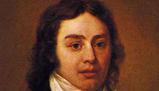
Samuel Taylor Coleridge was born in Devonshire in 1772. He was influenced by the ideals of French revolution, which made him an enthusiastic republican. After the disillusionment with the French revolution, he planned to institute the so-called “Pantisocracy”, an utopian community in Pennsylvania, but he never realized this project. He suffered from rheumatism, depression and manic activity, so he had a prescription for laudanum, which was a medicine that contained opium, and he became addicted to this drug.
Collaboration with Wordsworth
In 1797, he met the poet William Wordsworth and he settled in Somerset where the two poets started an important collaboration. During these years, he published most of his best poetry:
•“ The Rime of the Ancient Mariner ”, which was his masterpiece and the first poem of the collection “ Lyrical Ballads”
•” Christabel ” (1797), an unfinished poem, set in the Middle Age, about a young girl under a witch ‘spell.
• “Kubla khan”, an unfinished poem written in 1798.
In 1798, he joined Wordsworth and his sister in the Lake District, but the returned to England and he began a career in journalism. He died in 1834.
Imagination and creativity
Coleridge emphasized the idea of imagination and creativity, which he considered the things that defines us as human beings. He considered two kinds of imagination:
- primary imagination , connected to the human perceptions and the power to produce images. Everybody had this type of imagination but used it unconsciously.
- secondary imagination : is used consciously. Not everybody had this type of imagination, but only the artists, which could build new parallel world respect reality. Wordsworth’s process of “recollection in tranquility ” is the equivalent to Coleridge’s primary imagination.
Suspension of disbelief
The “suspension of disbelief ” was the process using by Samuel Taylor Coleridge in order to make the uncommon acceptable to the human mind, so Coleridge’s start point was the supernatural. Unlike Wordsworth, who wanted to make an ordinary thing extraordinary, Coleridge wanted to make the extraordinary an ordinary thing. Thanks to the suspension of disbelief the reader and also the writer tends to believed completely to unreal worlds created by the strong force of imagination.
The rime of the ancient mariner
“The Rime of the Ancient Mariner” is a long poem written by Samuel Taylor Coleridge in 1798. Coleridge used the story of an ancient mariner to describe what a spiritual journey is like: a passage from crime to redemption. This long poem is made up of seven parts setting in a boundless sea and it talks about the story of a mariner who kills motiveless an albatross that was driving the ship towards salvation. So the mariner committes a crime against creation and because of his sin the shipmates are condemned to death. The mariner is the only one who survive and he have to live an eternal life in which he have to tell to everyone his story.
Domande da interrogazione
- What were the early influences on Samuel Taylor Coleridge's life and how did they shape his ambitions?
Samuel Taylor Coleridge was influenced by the ideals of the French Revolution, which initially made him an enthusiastic republican. This influence led him to plan an utopian community called "Pantisocracy" in Pennsylvania, although it was never realized. His early life was also marked by struggles with rheumatism and depression, leading to an addiction to laudanum.




 Accedi a tutti gli appunti
 Tutor AI: studia meglio e in meno tempo


