


Concetti Chiave
- Australia is a vast country and the smallest continent, known for its diverse climates ranging from tropical in the north to temperate in the south-east and south-west.
- The country's government is a Federation of States and Territories, functioning as a Constitutional Monarchy under the Commonwealth, with Queen Elizabeth II as the Head of State.
- Indigenous people, the Aborigines, have a rich cultural heritage dating back 50,000 years, with Uluru being a sacred site and significant to their traditions.
- European colonization began with Dutch and British explorers; Australia's first European settlers were convicts, followed by immigrants from various countries.
- Australia's unique fauna includes species like the koala, kangaroo, and dingo, which are not found naturally anywhere else in the world.
Position:
Indice
What is the Geography and Climate of Australia?
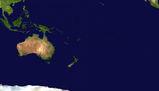
Australia is part of Oceania. It is a huge country but the smallest continent in the world. People call it «down under» because it is in the Southern hemisphere, opposite Europe. As a result also the seasons are opposite to ours.
In the north-east there’s the Great Barrier Reef : one of the World Natural Wonders, a protected area and a natural reserve.
The central desert area of the country is called the Outback. There, the colours are red, ochre, brown.
Climate:
The country is so big that there are different climates: the northern part has tropical climate, the central part, the Outback, is hot, dry and semi desert. The south-east and south-west have a temperate climate: here are the big cities.
Government:
Government and Population
It is a Federation of States and Territories, a member of the Commonwealth (the union of former British colonies which now are independent but share economic and cultural relationship with Britain).
It is also a Constitutional Monarchy whose Head of State is Queen Elisabeth II.
Population:
The population is of 22million. Most of it is concentrated in the south-east where the biggest cities are.
Main Cities:
Major Cities and Holidays
Canberra: the capital city.
Sidney, the largest city of Australia.
Brisbarne
Melbourne
Adelaide
Perth
Darwin
Festivals:
Australia Day is on 26 th January. It celebrates the foundation of the country.
Harmony Day on the 21st March has been recently introduced to promote cohesion and inclusion in the multicultural Australian society
Native People:
Indigenous Population and Culture
The Native people of Australia, the Aborigenes, settled there 50,000 years ago. They probably arrived from Africa, through Eurasia.
Their culture and their traditions are based on very ancient myths like that of «Dreamtime» that is the time of creation when everything began and all natural environment was created. Unfortunately European’s arrival destroyed their culture.
Aboriginals had the continent to themselves for 50,000 years. Today they make up less than 3 percent of the population, and their traditional lifestyle is disappearing.
The Didgeridoo is a typical aboriginal musical instrument. It’s made up of a hollow wooden tube, nearly one metre long and it produces a deep sound.
The Boomerang was used by Aborigines as a weapon for hunting. Now tourists buy it as a souvenir: if you throw it it returns back to the thrower.
Ayers Rock:
Uluru and Its Significance
Ayers Rock is called Uluru in the aboriginal language. It’s situated in the southern part of the Northern Territory. It is a sacred place for the Aborigines. It’s a sandstone mountain 348 m high, 9 km wide.
It’s a Unesco World Heritage Site. Its colour changes according to weather conditions: it is red at dawn and sunset, grey or gold on other occasions.
Eeuropeans in Australia:
History of Europeans in Australia
The first explorer to map the coast of Australia was the Dutch Willem Janszoon in 1606
In the second half of the eighteenth century Captain James Cook explored the continent and made it a British colony. The first Europeans in Australia were convicts (prisoners) who were sent there to colonize the land. They remained there and became the first inhabitants of Australia. They founded cities like Sidney.
Later arrived other Europeans: British, Dutch, Italian and German (1950s) because the country was a “place of opportunities”. Australia also attracted refugee from Russia and Europe and immigrants from south-east Asia.
Language:
Language and Flags
People in Australia speak Australian English which is slightly different from standard English expecially in pronunciation. The reason is historical: the first convicts spoke «cockney» that is the London dialect, then the contact with the Aborigines, the immigration of the 1900s, mass media and internet which accellerated the «americanization».
Some typically Ausrtalian words: «G’day», «boomerang» «dingo» «outback» «bush»…
Flags:
The Australian flag consists of a blue field on which, in the upper left corner, is the Union Jack (to remind the union with Britain). The seven pointed star represents the Commonwealth and on the right there’s the representation of the Southern Cross constellation.
The Aboriginal flag: the coulours represent the Sun, the red desert earth and the black skin of the Aborigines.
SCHOOL of the AIR:
School and Medical Services
Young people who live in the remote, desert areas of the Outback can’t go to school because sometimes the nearest school is at least 200 km far away. For this reason in 1951 the first School of the Air was opened in Alice Springs. Students could attend broadcasted lessons, remain in contact with their teachers, do their homework and send it to teachers. The introduction of Internet improved this activity. Today there are several schools of the air in the Australian territory. One week a year the students travel to the nearest school town and meet their teachers and schoolmates personally.
Reds:
Royal Flying Doctor Service provides medical assistance to people who live in isolated areas in less than one hour.
HOW TO DISCOVER AUSTRALIA:
Discovering Australia by Train
If you want to travel by train in southern Australia you can take the Indian Pacific railway which runs from Sidney to Perth through Adelaide and it takes three days and three nights. The distance is of 4,352 km. Its symbol is the eagle.
If you want to cross Australia from south to north you can take the Ghan Railway which runs from Adelaide to Darwin through Alice Springs in three days and two nights for 2,979 km. It is called Ghan because the Afghan workers built it crossing the Australian desert with their camels. The symbol of this train is the camel.
Animals:
Unique Australian Fauna
Australian animals are unique. You can’t find them anywhere else in the world.
The koala, the kangaroo, the kukabourra, different species of birds, the huntsman spider, the wombat, the dingo, the white shark, snakes.
Domande da interrogazione
- What are the key geographical features and climate zones of Australia?
- How is Australia's government structured and what is its population distribution?
- What is the significance of the Aboriginal culture in Australia?
- How did European exploration and settlement shape Australia?
- What unique educational and medical services exist in Australia's remote areas?
Australia, part of Oceania, is the smallest continent and is located in the Southern Hemisphere. It features diverse climates: tropical in the north, hot and dry in the central Outback, and temperate in the south-east and south-west where major cities are located. The Great Barrier Reef and Uluru are notable natural landmarks.
Australia is a Federation of States and Territories and a member of the Commonwealth. It is a Constitutional Monarchy with Queen Elizabeth II as the Head of State. The population is about 22 million, mostly concentrated in the south-east where the largest cities are.
Aboriginal people, who settled in Australia 50,000 years ago, have a rich cultural heritage based on myths like Dreamtime. Despite European colonization impacting their culture, elements like the Didgeridoo and Boomerang remain significant. Aboriginals now make up less than 3% of the population.
The Dutch explorer Willem Janszoon first mapped Australia in 1606, followed by Captain James Cook in the 18th century, who established it as a British colony. Initially settled by convicts, Australia later attracted European immigrants and became known as a "place of opportunities."
The School of the Air, established in 1951, provides remote education via broadcasted lessons, now enhanced by the Internet. The Royal Flying Doctor Service offers medical assistance to isolated areas within an hour, ensuring access to essential services despite vast distances.



 Accedi a tutti gli appunti
 Tutor AI: studia meglio e in meno tempo


