


Concetti Chiave
- The concept of double personality in literature is explored through contrasting characters, like Stevenson's single being with dual traits and Wilde's distinct personas.
- Stevenson, influenced by Calvinism, rejected its strict values, opting instead for a dandy lifestyle, mirroring the dual nature in "Dr. Jekyll and Mr. Hyde."
- The house of Dr. Jekyll symbolizes duality with its two doors, representing the respectable Dr. Jekyll and the sinister Mr. Hyde, emphasizing the Victorian era's double life.
- Stevenson's work highlights the eternal struggle between good and evil within individuals, a theme common in Gothic literature, as seen in "The Strange Case of Dr. Jekyll and Mr. Hyde."
- The duality theme is linked to broader literary influences, such as Marlowe's "Doctor Faustus," where a pact with the devil exemplifies the coexistence of good and evil.
Indice
What is Double Personality in Literature?
While in Stevenson we have a double personality in a solo being in Oscar Wild we have 2 beings in 2 different personalities with 2 different elements. Here we have the elegant dandy, in Dorian gray. The dandy is the Victorian figure of an esthetical character, the man that used to dress with elegant suits, long hair and he participated in places particular aristocrats. It had so a respectable life, different from the middle class, the dandies didn't work or they were artists but in the night they had a difficult life losing their respectability, it was so also for D’Annunzio, they had above all a particular life toward a repressed sexuality and they were also homosexuals. Oscar Wild was sent to the jail by the father of the boy that loved, and in jail that he wrote two different works with a moral teaching.
Stevenson and Calvinism
The same was for Stevenson which received from his mother a strong (Calvinism) education, the people of this religion were of narrow values. He refused the Calvinism and definite to become a dandy despite his weak health. Then it is important to understand this double aspect of Dr Jekyll about the personality. The novel has a Gothic remaking with referable elements to London or Edinburg because London had these double elements that could be seen by the east (respectability) and west (slums). Edinburg can be seen in the Georgian town with beautiful shops and roads, as also the part of Edinburg where reigned by delinquency.
The House of Dr. Jekyll
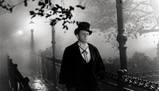
Another important element can be seen in the house of Dr Jekyll with two different doors,. The first one used by Dr. Jekyll and the second from Mr. Hide. The atmosphere is terrible, gloomy and all the events are represented in a dismal night, in the obscurity of the laboratory.
Stevenson wanted to show the moment of the transformation because he wanted to put in evidence his alter ego. All of this we can find in the 2 different figures in the build, on as he dresses, laboratory and house, the two doors, London and Edinburg, double life of Dr. Jekyll, everything is linked to the Victorian compromise and the double life that had in that period. It is important to understand that these double elements are double elements that we can find in every man in the conflict between the good and the evil.
The Contrast Between Good and Evil
It is the same contrast in the double present aspect in every man Blake said that this was normal and there had to be. It should not be that one side is better than the other but all must coexist. They take inspiration from Marlow who wrote "the doctor Faust" where a man signs with the blood a pact with the devil because he wants to be forever young, he did a pact with the devil and from here the Gothic novel is born.
Domande da interrogazione
- What is the concept of double personality in literature as depicted by Stevenson and Wilde?
- What role does the setting play in "Dr. Jekyll and Mr. Hyde"?
In literature, Stevenson presents double personality within a single being, as seen in "Dr. Jekyll and Mr. Hyde," while Wilde portrays it through two separate beings with distinct personalities, as exemplified by Dorian Gray. Both explore themes of duality and the conflict between respectability and hidden desires.
The setting in "Dr. Jekyll and Mr. Hyde" is crucial, with London and Edinburgh symbolizing the duality of respectability and vice. The contrasting elements of the city, along with Dr. Jekyll's house with its two doors, underscore the theme of double life and the Victorian compromise between public appearance and private reality.



 Accedi a tutti gli appunti
 Tutor AI: studia meglio e in meno tempo


