


Concetti Chiave
- The pilgrimage to Canterbury serves as a central narrative, with characters from various social classes, including Chaucer, embarking on a journey to Thomas Becket’s shrine.
- The structure of the work includes a 'general Prologue' introducing the pilgrims, with each tale prefaced by its own prologue.
- Canterbury symbolizes the celestial city, representing the end of life, with the pilgrimage acting as an allegory for human life's journey.
- Chaucer's use of rhyming couplets and iambic pentameters enhances the realism, employing exaggeration and caricature for effect.
- Chaucer’s characters are a depiction of English society, deliberately excluding the aristocracy, who would not travel with commoners.
THE PLOT
The pilgrimage to Canterbury
In spring thirty people, all belonging to different social classes and including Chaucer himself, are going on a pilgrimage to Thomas Becket’s shrine in Canterbury. They gather at the Tabard Inn in London. The host suggest that every pilgrims should tell two stories while going and two coming back. The winner will be a prize. All the pilgrims agree and set off.
THE STRUCTURE
The work consists of a ‘general Prologue’ where the pilgrims are introduced. The tales are preceded by a prologue.
Canterbury is the symbol of the celestial city itself, the end of life, and the journey of the pilgrims becomes the allegory of the course of human life. However, the work remained unfinished, and Canterbury is not reached by the pilgrims.
REALISM AND ALLEGORY
Realism and allegory
Chaucer used rhyming couplets made up of iambic pentameters. The most distinctive feature of the work is the realism, in fact, the author used the convention of exaggeration, caricature and the grotesque. The pilgrimage is also a by metaphor for life from the religious sphere.
CHAUCER NARRATOR
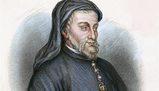
The tales are narrated by the different pilgrims but the reporting pilgrims is Chaucer himself.
CHARACTERS
The characters of Chaucer
Chaucer wanted to give a portrait of England society. He doesn’t portray the aristocracy of the peasants; this is because no nobleman would have travelled with commoners but instead with their own entourage.
Domande da interrogazione
- What is the significance of the pilgrimage to Canterbury in Chaucer's work?
- How does Chaucer incorporate realism and allegory in his tales?
- How does Chaucer depict the social classes in his work?
The pilgrimage to Canterbury serves as an allegory for the course of human life, symbolizing the journey towards the celestial city, or the end of life. Although the work remains unfinished and the pilgrims do not reach Canterbury, the journey itself reflects the religious and existential themes of life.
Chaucer employs rhyming couplets and iambic pentameters to create a realistic portrayal of society, using exaggeration, caricature, and the grotesque. The pilgrimage acts as a metaphor for life, blending realism with allegorical elements from the religious sphere.
Chaucer provides a portrait of English society by including characters from various social classes, except the aristocracy and peasants, as noblemen would not travel with commoners. This approach highlights the diversity and complexity of the social landscape during his time.




 Accedi a tutti gli appunti
 Tutor AI: studia meglio e in meno tempo


