


Concetti Chiave
- Shelley, born in 1792 to a noble family, was deeply interested in classicism and science, attending Oxford University.
- His pamphlet "The Necessity of Atheism" led to his expulsion from Oxford due to its controversial nature.
- Shelley's personal life was tumultuous, marked by a failed marriage and his first wife's tragic suicide.
- Influenced by anarchist philosopher William Godwin, Shelley adopted a pantheistic view, seeing love as the universe's driving force.
- He believed poets had a prophetic role, advocating for freedom and societal renewal through a spiritual and moral rebirth.
LIFE & WORKS
Shelley's early life and education
He was born in 1792 from a noble family.
He was fascinated by classicism and science.
H e entered in the university of Oxford.
In 1811 he wrote a pamphlet: “the necessity of atheism” (he was an atheist) he was expulsed because England was protestant so he didn’t recognized the king.
He married in Scotland a simply girl: they had two children, one died and the other one was given to Shelley’s father because of his morality (Shelley wasn’t responsible). The marriage failed.
Shelley married the daughter of the philosopher William Godwin.
Shelley suffered for a great event: he was shocked because his first wife after death of their child and after his second marriage committed suicide.
Shelley's philosophical influences and beliefs
He met the philosopher Godwin (anarchist). 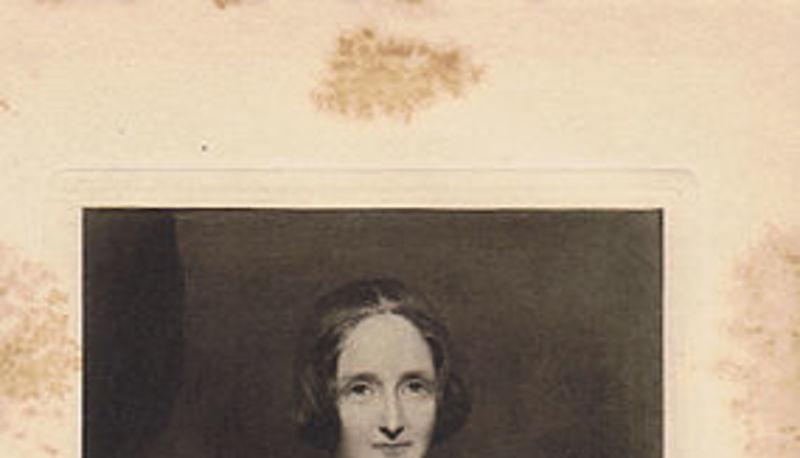 He went to Italy: he was compelled to left England for good.
He had a friendship with Byron. Shelley died in Italy and he was cremated by Byron on the beach and he was buried in the protestant church in Rome.
First he was atheist, then he had a pantheistic vision of nature: he believed that the force of universe is love.
Everyone is part of universe, of nature. He was an atheist so he was against the authority. He supported freedom (everymen should be free, individuality.
He hated slavery, to obligate someone.
On the contrary of Byron he was optimistic, he hoped in a rewel of society.
He had a different conception of nature from Wordsworth: he was passionate and immediate.
In Shelley opinion nature was the favourite refuge from the disappointment and injustice.
He thinks that the poet has a prophetic role, he had to show the continuity between life and death and to announce a spiritual moral rebirth of mankind.
The nature isn’t something which belong to God, but something which is made by the love of men.
Domande da interrogazione
- What were the key influences on Shelley's philosophical beliefs and how did they shape his worldview?
- How did Shelley's view of nature differ from that of his contemporaries, and what role did it play in his works?
Shelley's philosophical beliefs were significantly influenced by his interactions with the philosopher William Godwin, an anarchist, and his friendship with Lord Byron. Initially an atheist, Shelley later adopted a pantheistic view, seeing love as the force of the universe and advocating for freedom and individuality. He opposed authority and slavery, and unlike Byron, he was optimistic about societal renewal.
Unlike Wordsworth, who had a more serene view of nature, Shelley saw it as passionate and immediate. He believed nature was not divine but created by human love, serving as a refuge from societal injustices. This perspective was central to his works, where he emphasized the continuity between life and death and the potential for a moral rebirth.



 Accedi a tutti gli appunti
 Tutor AI: studia meglio e in meno tempo


