


Concetti Chiave
- Henry VIII embodied the Renaissance prince, excelling in arts and sports, and bolstering England's naval power.
- His reign saw significant religious upheaval, leading to the creation of the Anglican Church after conflicts with the Pope.
- Despite originally opposing Protestantism, Henry's personal desires led to a break from the Catholic Church.
- Thomas More, opposing the Reformation, was executed, highlighting the ruthless consolidation of state power over the Church.
- Henry's later years were marked by paranoia and executions, alongside significant social and economic upheaval.
Indice
Henry VIII: a renaissance prince
Henry VIII was a typical Renaissance prince. He liked music and dancing; he was a poet and an athlete. He was more ambitious and spent money on warship and guns, making the English fighting fleet the best Europe.
The first years of his reign were marked by the religious questions with the Pope which culminated in the Reformation. Rome was the anticlericalism of the 12th century had found its expression in the preaching of Wycliffe and the Lollards and the doctrines of Martin Luther, who was leading the Protestant Reformation in Germany, or of the French theologian John Calvin.
Henry's personal and political conflicts
Henry VIII didn’t intend to transform England into a Protestant country. He had been honoured the Pope with the title of Defensor Fidei as a reward for the pamphlet wrote against Luther. He regarded himself as the only source of right both in the spiritual and in the temporal field. 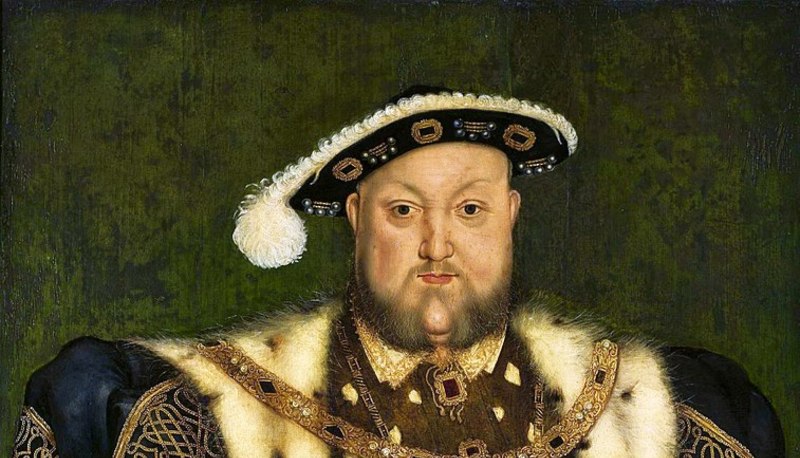 Henry had been married Catherine of Aragon. He had fallen in love with Ann Boleyn, a lady-in-waiting, and asked Pope Clemente VII for a divorce in order to marry her. Pope would not declare his first marriage invalid, and Henry declared him the “Supreme Head of the Church” in England. The new Anglican Church was born.
Thomas More and the reformation
Thomas More was the king’s Chancellors and a good Catholic, had his head cut off because oh his opposition. The instrument to make the Reformation effective was the Parliament. The legislation suppressed orders of monks and friars and established the supremacy of the State over the Church even in spiritual matters.
The king was persuaded by Thomas Cromwell to dissolve the monasteries and seize their wealth. The social charities such as school and hospitals for the poor mostly disappeared. Lands and monasteries came under the power of the English State. Some of the land confiscated went to the King while the rest was given or sold to members of the middle classes.
The dangerous final years
The last years of Henry’s life were dangerous. Many noblemen were beheaded on the slightest suspicion, if they had the remotest claim to the throne.
There was widespread poverty.
Domande da interrogazione
- What were Henry VIII's interests and how did they reflect his status as a Renaissance prince?
- How did Henry VIII's personal life influence the religious landscape of England?
- What role did Thomas More and Thomas Cromwell play in the English Reformation?
Henry VIII was a typical Renaissance prince, enjoying music, dancing, poetry, and athletics. His ambition extended to military advancements, as he invested in warships and guns, enhancing England's naval power.
Henry VIII's desire to divorce Catherine of Aragon and marry Ann Boleyn led to a break with the Pope, resulting in the formation of the Anglican Church with Henry as its "Supreme Head," marking the beginning of the English Reformation.
Thomas More, a devout Catholic and the king's Chancellor, opposed the Reformation and was executed. Thomas Cromwell, however, persuaded Henry to dissolve monasteries, transferring their wealth to the state and reinforcing the supremacy of the state over the church.




 Accedi a tutti gli appunti
 Tutor AI: studia meglio e in meno tempo


