


Concetti Chiave
- Enlightened thinkers rejected Calvinist original sin, emphasizing free will and human progress, detaching gratification from sin and shame.
- Journalism emerged as a new literary form, with figures like Addison and Steele using periodicals like The Tattler to engage the middle class in social discourse.
- 18th-century novelists like Richardson and Defoe portrayed middle-class life with realism, focusing on survival and social success in a relatable narrative style.
- Defoe, a dissenter and journalist, wrote influential works like Robinson Crusoe, using a first-person narrative that mirrored the main character's perspective.
- Defoe's narratives, characterized by their speed and fictional autobiographies, focused on characters' struggle for survival in isolation, often without prior planning or revision.
Rejection of Original Sin
Enlightened thinkers, following the philosophers Locke and Addison, rejected the Calvinist theory of the original sin and the depravity of man. Liberal thought confirmed free will, salvation for all men, the goodness of mankind, and its ability to progress. More people claimed entertainment and fulfilment as rights, in fact sexuality was accepted and gratification was dissociated from sin and shame.
1. Optimism encouraged faith in progress and human perfection and reason, which made man different from beasts, helped him in crucial choices and allowed man to doubt external influences.
2. A desire of balance and symmetry began to appear, especially in connection to the idea of imitation of nature.
3. In the The big interest of middle-class people in social problems and political life, and moreover their eagerness to be informed and to discuss events and characters, gave much impulse to the birth of a new literary form, journalism. 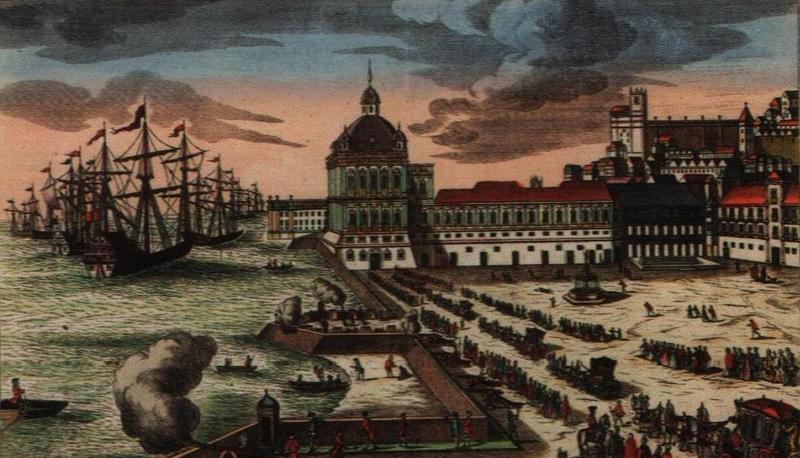 The two main men who contributed to the success of newspapers were Joseph Addison and Richard Steele. Steele started editing the Tattler, the first important newspaper, which talked about gossip or unimportant things discussed by the people. The Tattler became a periodical essay, which dealt with subjects of general interest, such as fashion, literature, manners and history.
Steele tried to be a cunning journalist and introduced bright ideas in order to deliver moral teachings under the guise of entertainment (or in the form), making the society more refined.
The Tattler was written in a casual conversational style under the names of different coffee-houses. Addison joined Steele at the Tattler and they later founded The Spectator, a daily journal. Mr Spectator, who stood for the authors themselves, commented upon all the customs and morals, the vices and virtues of contemporary society. His fellow members represented the various social classes: following the structure of this journal, these members used to talk to Mr Spectator about various themes: from popular vices to high literature arguments. The style was simple, clear and adapted to the middle-class, which regained social importance in this period.
Novel and Middle Class
The most important writers which established the new type of novel were Richardson and Defoe. In the 18th century novelists were spokespeople for the middle class. The plots which had traditionally made up the bulk of English literature for the previous centuries were abandoned by new novelists. The aim of the writers was not to satisfy the patron by writing in the language of the elite, but to write in a simpler language, to divulgate their production and to sell it. Since it was the bookseller and not the patron who granted the career, speed and output were important economic virtues. The writer aimed at realism: he tried to portray human experience from different perspectives. The realism was not about the kind of life portrayed, but about the way in which it was depicted. All the characters struggle for survival and for social success and can be divided into two groups:
1. Some of them live with reason, like
2. Others cannot control their passions and subordinate reason to their cravings
The narrative facts of the novel were told in chronological order. The settings were very realistic because in previous fiction the idea of place had been fragmentary, while now it was given a large amount of details such as town and street names to add to the realism of the novel.
Defoe's Career
Defoe was born in a family of dissenters in 1660. He started his career as a journalist, writing for Whig papers and supporting William of Orange under the reign of queen Anne. She did not like his critical attitude and put him in prison. After some time he denied his Whig ideas so he was freed and became a secret agent.
As a journalist he wrote the Review, a periodical which did not have much in common with the Tattler. It was an organ of moderation which spoke also of commercial interest.
Defoe’s most important pamphlet was The Shortest Way with Dissenters where he assumed the character of a Tory and argued ironically that the shortest way of dealing with the Dissenters was to eradicate them.
In 1719 he published Robinson Crusoe, which was followed by
Defoe’s long narratives were produced with extraordinary speed; they are fictional autobiographies which pretend to be true, written in diary form. Defoe never planned or revised his works: his aim as a writer was to produce a large and effective output. There are two different narrative methods: a combination of full scenic where, at a definite time, all the actions were presented. Defoe’s characters tell the story in first person. The point of view of the author always coincided with that of the main character. The characters are introduced with their actions. They usually appear in isolation and in a struggle to survive or to earn money, so they live in difficult conditions.
Domande da interrogazione
- How did Enlightened thinkers view the concept of original sin and human nature?
- What role did Joseph Addison and Richard Steele play in the development of journalism?
- How did the 18th-century novelists like Richardson and Defoe differ from their predecessors?
- What was unique about Defoe's narrative style in his works?
- How did Defoe's career as a journalist influence his literary works?
Enlightened thinkers, influenced by philosophers like Locke and Addison, rejected the Calvinist theory of original sin and the depravity of man. They embraced the ideas of free will, the inherent goodness of mankind, and the potential for human progress, dissociating gratification from sin and shame.
Joseph Addison and Richard Steele were pivotal in the development of journalism. Steele started editing The Tattler, which evolved into a periodical essay covering topics of general interest. Together, they founded The Spectator, a daily journal that commented on contemporary society's customs and morals, using a style accessible to the middle class.
18th-century novelists like Richardson and Defoe shifted away from traditional plots and elite language, aiming instead for realism and accessibility. They wrote in simpler language to appeal to the middle class, focusing on human experiences and social success, with narratives told in chronological order and detailed settings.
Defoe's narrative style was characterized by fictional autobiographies written in diary form, with a first-person perspective that aligned with the main character's viewpoint. His narratives were produced quickly, without planning or revision, and often depicted characters in isolation, struggling for survival or financial success.
Defoe's career as a journalist, writing for Whig papers and supporting political causes, influenced his literary works by instilling a sense of realism and urgency. His experience in journalism informed his narrative style, focusing on moderation and commercial interests, as seen in his periodical, the Review, and his ironic pamphlet, The Shortest Way with Dissenters.




 Accedi a tutti gli appunti
 Tutor AI: studia meglio e in meno tempo


