Skuola.net
by
Life
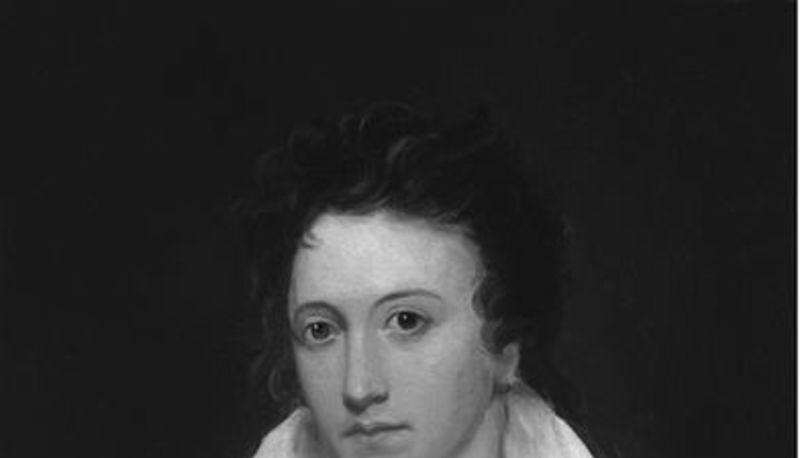
Percy Bysshe Shelley was born in 1792 at Field Place, near Horsham in Sussex, and he was the eldest son of Sir Timothy and Elizabeth Shelley. His grandfather received a baronetcy in 1806 and his father, Timothy Shelley, was a member of Parliament and a country gentleman.
He was brought up in privileged circumstances, attending Syon House Academy in 1802 and Eton in 1804, where he discovered the works of William Godwin, a philosopher, in which he became a fervent believer; the young man embraced the ideals of liberty and equality espoused by the French Revolution, and devoted his considerable passion and persuasive power to convincing others of the rightness of his beliefs.
In the autumn of 1810, Shelley matriculated at University College, Oxford, but the next year he was expelled over the publication of a pamphlet entitled The Necessity of Atheism, because atheism was an outrageous idea in religiously conservative nineteenth-century England.
In August 1811 he eloped with Harriet Westbrook, whom he married despite his father’s opinion. As years wore on, relations between Harriet and Shelley deteriorated seriously, even if they had a daughter and not long after, he fell in love with another woman, Mary Wollstonecraft, whom he was eventually able to marry, and who is now remembered primarily as the author of Frankenstein.
In 1816, the Shelleys travelled to Switzerland to meet Lord Byron and the two men became close friends. Here Shelley composed the “Hymn to intellectual beauty” and “Mont Blanc”.
In 1818 they moved to Italy, they stayed in Rome and in Pisa, where they also formed a circle of English expatriates in, travelling throughout Italy; during this time Shelley wrote most of his finest lyric poetry, including the immortal “Ode to the West Wind”, “To a Skylark” and “Adonais”, an elegy for Keats.
Shelley’s works from this period include “The Cenci” and “The mask of anarchy”, a political protest written after the Peterloo massacre.
Shelley drowned in the Mediterranean Sea in 1822. After his body washed ashore near Viareggio, it was cremated according to the dictates of Italian law.
The younger generation of English Romantic poets
Shelley belongs to the younger generation of English Romantic poets. Where the older generation was marked by simple ideals and a reverence for nature, the poets of the younger generation, which also included John Keats and Lord Byron, came to be known for their sensuous aestheticism, their explorations of intense passions, their political radicalism, and their tragically short lives.
They looked at nature primarily as a realm of overwhelming beauty and aesthetic pleasure. Shelley tends to invoke nature as a sort of supreme metaphor for beauty, creativity, and expression.
This means that most of Shelley’s poems about art rely on metaphors of nature as their means of expression: the West Wind in “Ode to the West Wind” becomes a symbol of the poetic faculty spreading Shelley’s words like leaves among mankind, and the skylark in “To a Skylark” becomes a symbol of the purest, most joyful, and most inspired creative impulse.
The skylark is not a bird, it is a “poet hidden.” To Shelley himself, “Nature’s vast frame” and “the web of human things” were a problem of which he was assured that he had the key.
Both the Shelleyan and the Keatsian vision of beauty are mirrored, finally, in the poetic instrument of expression itself, in their speech and verse. Image and personification, condemned by Wordsworth, reappear in unsurpassed subtlety and splendour.
But both are masters, also, of a noble and passionate simplicity. And, in both, the inner rhythm of thought is accompanied and borne out by new and exquisite rhythms of musical verse.
Skuola.net
by


 Accedi a tutti gli appunti
 Tutor AI: studia meglio e in meno tempo