


Concetti Chiave
- The ballad originated as a musical rhymed meter recited or sung by common people in social settings like alehouses and fairs.
- Ballads are anonymous narrative poems with short stanzas, typically following an abcb rhyme scheme, combining dialogue and narration without moralizing.
- Different types of ballads include those focused on magic, border conflicts, love and domestic tragedy, and outlaws like Robin Hood.
- The universe of ballads is enriched with magical elements such as talking animals, fairies, and witches possessing supernatural powers.
- Medieval narrative poems, like Chaucer's Canterbury Tales, blend storytelling with character exploration and moral lessons through diverse styles and settings.
Origins and Characteristics of the Ballad
The ballad was a musical rhymed meter produced by the common people and recited or sung in alehouses or at fairs. The word ballad came from Latin: in fact these poems were sung to a simple instrumental accompaniment. Popular ballads were anonymous narrative poems, written in short stanzas of two or four lines, rhyming abcb. There is a mixture of dialog and narration, the speaker does not introduce his personality and there is no moralizing or didactic approach.
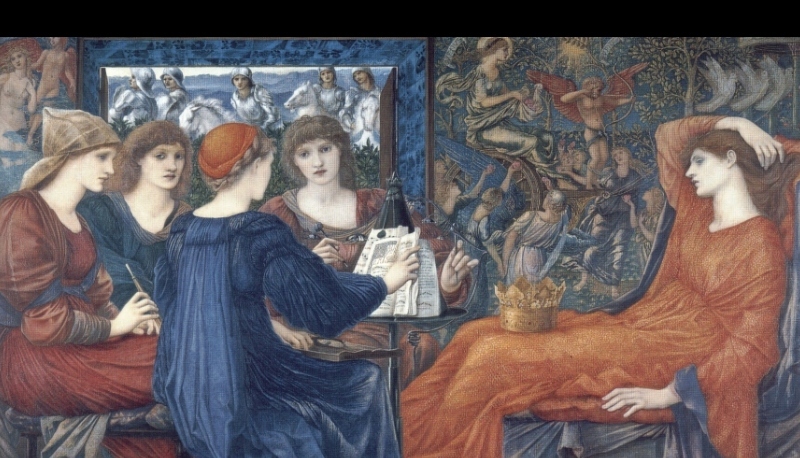
The types of
- Ballad of magic, about fairies, ghosts, witchcraft and transformation
- Border ballad
- Ballad of love and domestic tragedy
- Ballad of outlaws, for example Robin Hood
Magical Universe of Ballads
The ballad universe was peopled with speaking animals, birds, fairies and witch. These characters are magic with supernatural power.
A narrative poem tells a story in verse and contains a variety of ambient such as the setting in time and place, the description of character. The narrator was often in the first person. Medieval narrative included the exempla, in form of parables and fables, where the moral teaching could be drawn both by real and by fantastic situations. Then there are the fabliau, whose subjects were often-clerical; the romance, a tale in which appear the concept of love and war in a courtly setting. They described the lifestyle, the psychology and the experience of a singular character.
The greatest example of narrative poem was given by Geoffrey Chaucer in Canterbury Tales, a long poem where each tale has meaning in relation to the character of its teller and to the other characters. The tale contains interludes. This poem has a large variety of style
Domande da interrogazione
- What are the defining characteristics of a traditional ballad?
- What are some common themes found in ballads?
- How does Geoffrey Chaucer's "Canterbury Tales" exemplify the narrative poem genre?
Traditional ballads are anonymous narrative poems, typically written in short stanzas of two or four lines with an abcb rhyme scheme. They often include a mix of dialogue and narration without introducing the speaker's personality or a moralizing tone.
Ballads often explore themes such as magic, with elements like fairies and witchcraft, love and domestic tragedy, and tales of outlaws like Robin Hood. These themes create a magical universe populated by supernatural characters.
"Canterbury Tales" by Geoffrey Chaucer is a prime example of a narrative poem, as it tells a story in verse with a variety of settings and character descriptions. Each tale is meaningful in relation to its teller and other characters, showcasing a wide range of styles and interludes.



 Accedi a tutti gli appunti
 Tutor AI: studia meglio e in meno tempo


