


Concetti Chiave
- Arab tribes practiced diverse religious customs, worshipping gods, demons, and celestial bodies, often through objects like stones or trees.
- Religious sites and statues of deities were commonly found in small towns and along caravan routes in the desert.
- Mecca was a central holy city where Arabs frequently made pilgrimages, pausing all conflicts during these spiritual journeys.
- The Kaaba in Mecca housed the "black stone," a revered object believed to be a meteorite that turned black due to human sins.
- Mecca was also an economic hub, hosting fairs and markets where traders and scholars gathered, providing a backdrop for Muhammed's teachings.
Indice
Religious practices in arab tribes
Religion is one aspect most people are attached to and practised in many countries (though the night be different).
Regarding the aspect related to the religion, almost every Arab tribe had their own gods or demons, they often worshiped objects in the form of stones or trees or even celestial bodies: molyti shrines, in fact, were built on the hills because there they celebrated the cult of lunar deities. The statues of various deities were also kept in recent sacred places within the small towns that rose in the desert or along the caravan routes.
What is the significance of Mecca?
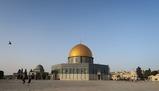
The most important of these sanctuaries stood in the center of the holy city of Mecca. Annually Arabs made pilgrimages to their holy city, suspending for the occasion every conflict.
In the same sacred enclosure that welcomed all of their gods was also the Kaaba, which is a cube-shaped building designed to preserve the so-called "black stone" (probably a meteorite): it was said that it had fallen on the earth by God's will and that , as originally it was white, but had turned black because of the sins of men.
Economic and cultural gatherings
The reasons that pushed the Arabs to Mecca were not only religious but also trade and economy. Every spring at Mecca there were organized fairs and markets, traders coming from everywhere, the scholars met to exchange knowledge and opinions and set out banquet with music and dances to entertain. In this context Muhammed began to preach a new religion that would provide the key to the unification of the Arab popular.
Domande da interrogazione
- What were the religious practices of Arab tribes before the rise of Islam?
Arab tribes practiced polytheism, worshiping various gods or demons, often through objects like stones, trees, or celestial bodies. They built shrines on hills for lunar deities and kept statues of deities in sacred places along caravan routes.




 Accedi a tutti gli appunti
 Tutor AI: studia meglio e in meno tempo


