


Concetti Chiave
- Keats, part of the second generation of Romantic poets, chose poetry over a medical career, influenced by personal tragedies and love, leading to masterpieces like "La Belle Dame sans Merci" and "Ode on a Grecian Urn".
- Unlike his Romantic peers, Keats rejected the autobiographical use of "I", focusing instead on human nature and the essence of experiences beyond personal narratives.
- Imagination is central to Keats' work, creating a vision of idealized human life, while beauty, both physical and spiritual, serves as a timeless theme in his poetry.
- Negative capability is crucial for Keats, emphasizing the poet's ability to embrace uncertainty and merge with the inspiration source without rational interference.
- "Ode on a Grecian Urn" explores themes of eternal love and art's immortality, encapsulated in the famous line: "Beauty is truth, truth beauty."
What were Keats' early life and influences?
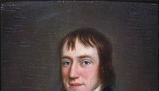
Keats: he belongs to the second generation of Romantic poets. He was born in London in 1795 from humble family. He announced his decision to be a poet in a sonnet in 1816 (he was studying to be a surgeon). His mother and brother died for TB in 1818 then he fell in love with Fanny Browne. During this period he wrote a series of masterful poems the eve of St Agnes ,” La Bella dame sans merci” (where displays once a taste for medieval themes and form), the greatest ode like “Ode on a Grecian urn”(where explains the relationship between art and life, reality and imagination, love and pleasure) . In 1820 he comes in Italy to recover and he died in 1821 in Rome.
Keats' poetic philosophy
Poetry: the common romantic tendency to identify scenes and landscape with subjective moods and emotions is rejected by him (poetical personal pronoun “I” isn’t use) so his lyrical poems are not autobiographic like Shelly and experience are not the substance of the odes but is “behind”. Another departure with Romanticism is summarized in his speech : “scenery is fine but human nature is finer”.
Imagination and beauty in Keats' work
-The imagination to Keats has two forms: in the first place the world of his poetry is predominantly artificial and he imagines it rather than reflect from direct experiences. In the second place keat’s poetry are a vision of what he would like human life to be like, stimulated by his own experience of pain and misery.
-The central theme of his poetry is beauty that made him a sort of precursor of the decadents or pre-Raphaelites in Victorian age who saw in his cult of beauty the expression of “Art for art’s sake”. In fact he is the forerunner of the aesthetic movement and this aspect move him away to the romantic movement.
Beauty is the ideal of all art .The classical Greek world inspires Keats in his works. In fact in his verse he re-interpreted with the eyes of a romantic movement the Greek beliefs.
He talks about two kind of beauty: physical beauty is mutable and spiritual one that is immortal, “Spiritual beauty is a joy for ever”.
Negative capability and the poet's identity
-Poet need to negative capability: in fact poet must deny his rational filter to identify himself with the object which is the source of his inspiration and the place where Truth resides.
Negative capability is the ability to experience “uncertainties ,mysteries, doubts without any irritable reaching after fact and reason” therefore to accept that it can not be a solution to the pressing problems is important for artists.
-poet “is everything and nothing ,has no character”, is a Cameliom. Poet is the most unpoetical, the sun, the moon, the man are poetical have unchangeable attribute but poet has none, no identity, the certainly the most unpoetical of all God’s Creature.
Ode on a Grecian urn
Ode on a Grecian urn: In the writing of this ode he was inspired by the scenes painted on a Greek urn who he saw in a museum and he described it perfectly . The Ode celebrates the immortality of the urn so of the art in general. On the urn was painted on one side a scene which represent the sacred love and one the other side a scene of profane love. He talks about a pure and idyllic love between a boy and girls and the urn, which was a material thing and symbol of something who have to “die” in this ode became a symbol of the life. The scene represented a Platonic ,spiritual, ideal and eternal love and is a scene who remain the same in the time and will never change.
The aim of his work stayed in this word: “ Beauty is truth, truth is beauty.. that is all we know on earth and all we need to know”.
La belle dame sans merci
La belle dame sans merci: is a romantic ballad in contraposition with the scenes described in the ode . The ballad talks about a damn couple, a love between a knight and a beautiful lady, a physical love that consumes and tear off the vital forces. The atmosphere is haunting, anguishing ,suffocating and fearful like a gothic scenes.
A knight met the lady (fairy lady, beautiful with wild eyes and she moved in elegant way) and fall in love with her, they spent all time night together . She took him in a secret place and then he fell asleep. When he wake up he and he didn’t stay in the cold hill side but in another place. So was confused, he didn’t know if he was dreaming or not. He only see the pale that was the older victim or the fairy lady . The poetry can’t help him.
Interpretations of La belle dame sans merci
Interpretation:
1. The poem hints at the poets unhappy love for Funny Browne whom he could not marry because pour and hill.
2. Metaphoric condition of the poet: poetry requires total devotion and the poet lives in the secluded magic world of imagination losing contact with reality, alienated from society that he perceived as hostile to him
3. It’s the counterpart of the more happy life of 2 young people in the decoration of the urn whose love is forever warm and happy because never fulfilled
4. Bella dame is the death suggested by the cyclical form which gave resolution and progress
5. It anticipates the pre-Raphaelites and symbolism for the symbolic values of flowers, strange language ,unknown woman and pictorial quality of the verse.
Domande da interrogazione
- What were the key influences in John Keats' early life that shaped his poetry?
- How does Keats' poetic philosophy differ from other Romantic poets?
John Keats, born in London in 1795, was influenced by his humble beginnings and personal tragedies, such as the deaths of his mother and brother from tuberculosis. These experiences, along with his love for Fanny Browne, inspired a series of masterful poems, including "La Belle Dame sans Merci" and "Ode on a Grecian Urn."
Unlike other Romantic poets, Keats rejected the use of the personal pronoun "I" and did not make his lyrical poems autobiographical. He believed that "scenery is fine but human nature is finer," focusing on the beauty and imagination rather than personal experiences.




 Accedi a tutti gli appunti
 Tutor AI: studia meglio e in meno tempo


