


Concetti Chiave
- Italy transitioned from a major emigration country to an immigration destination starting in the late 1970s, with the North-West being a primary destination for migrants today.
- In the 1990s, significant migration flows originated from North Africa, the Philippines, and post-Soviet and Yugoslav regions, with recent years seeing arrivals due to Middle Eastern conflicts.
- Immigration has significantly impacted Italy's demographics, lowering the average age of residents and contributing substantially to the economy, with immigrants producing 6.1% of GDP in 2005.
- Foreign workers, who are a vital part of the labor force, contributed significantly to social security, with 452,000 workers paying 1.27 billion euros in contributions.
- Ethnic entrepreneurship has grown, with a significant increase in immigrant-led businesses, particularly individual enterprises, contributing 8.9% to the national manufacturing sector.
Immigration in Italy starting from 1970 up to the present day
Indice
Immigration in Italy since 1970
For almost a century, Italy was one of the leading European emigration countries and only in the second half of the 1970s did the country begin to receive immigration flows from the Third World and, later, from Central and Eastern Europe (CEE). In the 1990 the North-West became the prime destination. Today migration of the foreign population is highest in the North-West, followed by the North-East and the Centre.
Migration flows since the 1990s
During the 1990, the majority of foreign residents came from North Africa and from the Philippines . The collapse of the Soviet Block and former Yugoslavia gave rise to consistent flows from eastern and south-eastern European countries, flows that have grown progressively in the 2000s. However In recent years thousands of people start to arrive in Italy to save themselves from conflicts that begin to overwhelm the Middle East.
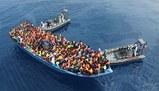
Last year a record 170,000 people fleeing poverty and conflict in Africa and the Middle East have made the perilous crossing to Italy. More than 500 people have died in the first three month of 2015.
Economic and demographic impact
What positive things they brought us ?
- In Italy, immigration has had a significant impact on population size and age structure. The mean age of resident foreigners in early 2007 was 30.9 years and for Italians it reached even 43.5.
- In economic terms, too, the impact of foreign immigration has become greater with the increase in the immigrant population. According to unofficial estimates, in 2005, 6.1 % of GDP was produced by immigrants.
In particular, the proportion of economically active foreign men in 2007 was 88 % of the population between the ages of 15 and 64, compared to 73.5 %for Italians; for women, both figures were lower and reached 58.7 % for immigrants and 50.1 % for Italians.
According to the 2007 labor force survey, a total of 1.5 million foreigners were employed.
Although immigration is not the only solution for the significant financial problems of the social security system, it is impossible to deny its benefits. According to an estimate by the Italian economic newspaper “ Il Sole 24 Ore” (March 3, 2003), foreign workers pay an average of 2,800 € per year in social security contributions. If we keep in mind that there were 452,000 immigrant workers registered with INPS we can estimate that the institute received 1.27 billion € .
Growing ethnic entrepreneurship
Also the number of ethnic entrepreneurs is greatly increasing. Entrepreneurial initiative have developed and there were 5 out of 6 immigrants registered with the Chamber of Commerce after 1990. Immigrants are pushed towards this type of adventure despite the risks, especially for those who have not had a similar experience in their country of origin, by the hope of greater gratification with respect to employment with a company.
A study done by the National Confederation of Craft Sector and Small and Medium Enterprise - CNA (July 2003), has indicated that there are 79,005 non-EU entrepreneurs, of which 56,421 are company owners with the remaining figure acting as partners. In almost one third of the cases, they are artisan businesses.
More and more Italian companies are led by immigrants
There was an increase between 2012 and 2015 of 86,000 units, totaling almost 540,000 (8.9% of national manufacturing). It is mostly individual businesses . The army of youth businesses is expanding and, in particular, in the second quarter of last year it has increased by more than 20,000 units. In absolute terms the contribution that those under 35 have made to the growth of the entrepreneurial base, between April and June was 54%.
Domande da interrogazione
- When did Italy transition from being a country of emigration to one of immigration?
- How has immigration impacted Italy's economy and demographics?
Italy began to receive immigration flows from the Third World and later from Central and Eastern Europe in the second half of the 1970s, marking its transition from a leading European emigration country to one of immigration.
Immigration has significantly impacted Italy's population size and age structure, with a younger mean age among resident foreigners compared to Italians. Economically, immigrants contributed to 6.1% of GDP in 2005, with a high proportion of economically active foreign men and women compared to Italians.



 Accedi a tutti gli appunti
 Tutor AI: studia meglio e in meno tempo


