


Concetti Chiave
- The second generation of Romantic poets emerged in the early 19th century, ending with the Victorian Age's beginning in 1837.
- Lord Byron was a noble yet financially strained poet known for his rebellious nature and scandalous life, dying heroically in Greece.
- John Keats, a precursor to the aesthetic movement, was plagued by personal hardships and a sense of impending death, influencing his poetic themes.
- Keats' poetry focused on the transience of life and the search for permanence, distinguishing between ephemeral physical beauty and enduring spiritual beauty.
- Keats spent his final days in Italy, passing away in Rome, where his grave inscription reflects his feelings of obscurity and fleeting legacy.
Indice
The Second Generation of Romantic Poets
The II generation of Romantic poets took place at the beginning of 19 th century, in the 20s and 30s. In 1837 there is the end of Romanticism and the start of The Victorian Age.
- Byron
- Shelley
- J. Keats
Byron and Shelley has 3 common features:
- They died young;
- They were socially committed;
- They were rebel of the tyranny.
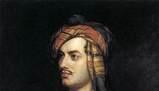
Byron was noble but not rich. He was very handsome but a little lame. He travelled a lot. He had a really scandalous life, he had an incest with his half-sister so he had to leave Britain, which was a puritan country and he moved to Greece. He died there as an hero, fighting.
It is a quite autobiographical creation, a rebel who puts himself against tyranny. His main features are:
- he is noble;
- He has mysterious origins;
- He is hard outside but tender inside;
- He is very good looking, attracting both woman and man;
- He is a lonely man, moody – who can swing from moments of enthusiasm to moments of melancholy.
What is The Life and Poetry of Keats?
Keats is second only to Shakespeare. He was the foreigner of the aesthetic movement, followed by Oscar Wild.
He was affected by the sense of impending death (caused by financial, health and love problems).
His life is very important to understand his poetry. He has a very short life, he was born in London in 1795 into an humble family but well of. His father was a stable-keeper, but he died very soon. John Keats studied in order to became an apothecary surgeon but he left his studies because he felt his mission was writing. He wasn’t appreciated and so he couldn’t receive any salary. Moreover he was sick – in his family run the mortal disease of tuberculosis. Meanwhile he was fallen in love with a young lady, Fanny Brown but he could not marry her because he was really poor. He had a turn in Island (by foot and horses and in bad conditions) and he became seriously ill, so he decided to move to Italy.
The Death and Legacy of Keats
He moved to Italy in 1820, he lived in Pink House in ‘Piazza Spagna’. He died there and he is buried in the protestant cemetery in Rome. His house was changed into a museum. On his grave there is written ‘here lies one whose name was written in water’: he believed nobody would never know him.
- Transience of life
- He looks for something permanent
- Not moral/social message: he only wants to write of beauty. There are two types of beauty
1) Physical beauty (a woman, a landscape), fated to die
2) Spiritual beauty (art), last forever
Domande da interrogazione
- What are the common features shared by Byron and Shelley as part of the second generation of Romantic poets?
- What is the significance of the inscription on John Keats' grave?
Byron and Shelley shared three common features: they both died young, were socially committed, and were rebels against tyranny.
The inscription "here lies one whose name was written in water" on Keats' grave reflects his belief that he would not be remembered, highlighting the transience of life and his quest for something permanent through beauty in his poetry.



 Accedi a tutti gli appunti
 Tutor AI: studia meglio e in meno tempo


