


Concetti Chiave
- After Henry VIII's death, his son Edward VI, too young and ill to rule, was succeeded by Mary, known as "Bloody Mary" for her persecution of Protestants.
- Elizabeth I established a Protestant Church with some Catholic elements, pleasing most English but facing opposition from Puritans.
- Elizabeth's reign saw England become a leading Protestant power, successfully defeating the Spanish Armada in 1588 with a skilled navy.
- James I, succeeding Elizabeth, ruled by divine right and dismissed Parliament, setting the stage for future conflicts.
- Charles I's reign led to civil war between Cavaliers and Roundheads, resulting in Oliver Cromwell's Puritan-led Commonwealth.
Indice
The succession of Henry VIII
When Henry VIII died in 1547, after marrying three more times, his nine years old son became King Edward VI. Since Edward was too young and sick to rule, a council of Protestant lords governed England for him.
When Edward died in 1553, Henry’s first daughter Mary became queen. She was Catholic and accepted the Pope as head of the English Church. She persecuted the Protestants and the people began to call her “Bloody Mary”.
Mary died in 1558 without a child to succeed her. Her half sister Elizabeth, who was 25, became queen.
The Church under Elizabeth I
Elizabeth and Parliament decided that the English Church should be Protestant, but with some Catholic features. The monarch would be head of the Church, but, at the same time, bishops would handle daily affairs as they did in the Catholic Church.
Most English people were pleased with the blend of Protestant belief and Catholic practice. 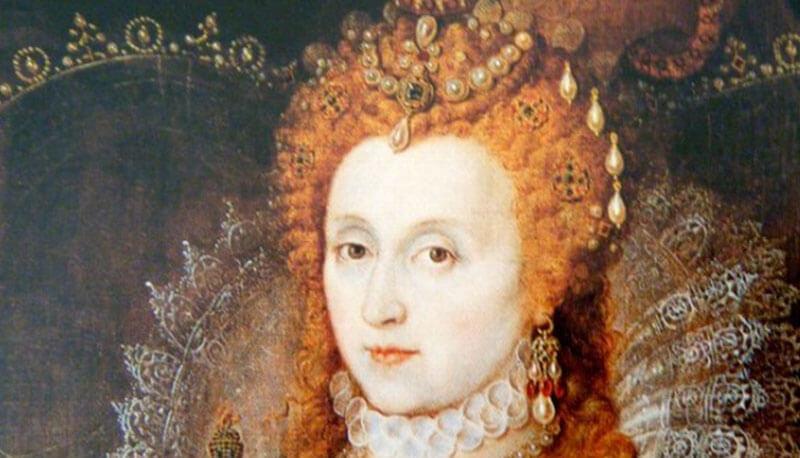 The few groups of Catholics who were not pleased remained outside the English Church. Some groups of Protestants also opposed Elizabeth’s Church. As they wanted to purify the Church of Catholic ways, they became known as Puritans.
The threat of Spain and the English victory
Under Elizabeth I, England became the leading Protestant power in Europe. Spain, under Philip II, remained the leading Catholic power. In order to defeat England, Philip ordered the building of the Spanish Armada, a fleet of 130 ships. In the spring of 1588, the Armada sailed towards England.
Elizabeth had the English fleet reorganized. A new navy of 134 fighting ships and merchant vessels was formed. Expert sailors handled the English ships with a great deal of skill. One sailor, Sir Francis Drake, was famous for his overseas voyages and his capture of Spanish ships. The English were able to fight the Spanish ships successfully one by one. Only half of the Armada survived.
The transition to James I
In 1603 Queen Elizabeth I died. The Crown passed to a distant relative, James VI of Scotland, a member of the Stuart family. He became James I of England. James I believed in rule by divine right. When Parliament objected to some of his actions, he dismissed it and ruled without legislature for ten years.
The reign of Charles I and the civil war
When James I died in 1625, his son Charles I became king. Charles I held the same beliefs about the monarchy as his father. In 1628, he was forced to call a meeting of Parliament to approve new taxes to pay for the wars with France and Spain.
In 1629 Charles I dismissed the Parliament. In 1642 civil war broke out between the Crown and the Parliament.
Those who backed the Crown were called Cavaliers. They were mostly wealthy Roman Catholics and Anglicans. Those who backed Parliament were called Roundheads because they wore their hair short. They were mostly middle and lower-class Puritans and other Calvinist.
The government of Oliver Cromwell
Oliver Cromwell, a Puritan leader who backed Parliament, set up a New Model Army. In 1649, the New Model Army defeated the King’s army and ended the war. Cromwell and his supporters put Charles I on a trial and, in 1649, beheaded him. Cromwell took over the rule of England, now called the Commonwealth.
He finally did away with Parliament and governed as a military dictator for the Puritan minority.
Many Puritans were very strict. They disapproved of dancing, theatre-going, sports, and other popular amusements. They believed that people should spend all their free time praying and reading the Bible. Despite this, Puritan rule was not completely gloomy. Cromwell himself was fond of music and horses and allowed women to act on stage for the first time.
The restoration of the monarchy
After Cromwell died, his son Richard took over. But by 1660, Parliament decided that England needed a monarch again. The choice was Charles II, Charles I’s son, who was living in France.
Domande da interrogazione
- How did the English monarchy transition after the death of Henry VIII?
- What changes did Elizabeth I implement in the English Church?
- How did England under Elizabeth I respond to the threat from Spain?
- What led to the English Civil War during Charles I's reign?
- How did Oliver Cromwell's rule impact England after the civil war?
After Henry VIII's death in 1547, his son Edward VI became king at nine years old, but due to his youth and illness, a council of Protestant lords governed. Upon Edward's death in 1553, Mary, Henry's first daughter, became queen, followed by her half-sister Elizabeth in 1558 after Mary's death.
Elizabeth I and Parliament established a Protestant Church with some Catholic features, where the monarch was the head, but bishops managed daily affairs. This blend pleased most English people, though some Catholics and Puritans opposed it.
In 1588, Spain's Philip II sent the Spanish Armada to defeat England. Elizabeth reorganized the English fleet, which, led by skilled sailors like Sir Francis Drake, successfully fought the Armada, with only half of the Spanish ships surviving.
Charles I, like his father James I, believed in divine right and dismissed Parliament in 1629. His need for funds to wage wars led to tensions, culminating in a civil war in 1642 between the Crown's supporters, the Cavaliers, and Parliament's supporters, the Roundheads.
After defeating Charles I's forces, Cromwell led England as a military dictator under the Commonwealth, dismissing Parliament. His Puritan rule was strict, disapproving of many amusements, yet Cromwell allowed some cultural activities, like women acting on stage.



 Accedi a tutti gli appunti
 Tutor AI: studia meglio e in meno tempo


