


Concetti Chiave
- Charles Dickens drew inspiration from his difficult childhood, marked by his father's imprisonment and his own labor in a factory, which fueled the themes of his novels.
- His novels, set in London, are known for their intricate plots that often critique societal abuses, with a focus on the hardships faced by the poor.
- Characterization in Dickens's work highlights the habits and language of the middle and lower classes, often ridiculing social peculiarities without sarcasm.
- The character of Uriah Heep in "David Copperfield" represents evil, with Dickens using characters to portray moral lessons and critique societal norms.
- Dickens's style includes careful adjective use, repetition, and irony, employing humor to highlight misunderstandings and societal issues.
(1812-1870)
Indice
Childhood and Inspiration
He was born in the south coast of England. He had an unhappy childhood, his father went to prison for dept and he had to work in factory until he was 12. these days of sufferings were to inspire much of the content of his novels. When he realized that he has a talent for literature he taught himself shorthand and became a news paper reporter. The Posthumous Papers of the Pickwick Club revealed Dickens’s humoristic and satirical qualities.
Operas:
* DAVID COPPERFILD (1849-50)
* Oliver Twist
* Little Dorrit
* Bleak House
* Hard times
* Great Expectations
He had a busy life in a magazine editor.
He died in 1870 and he was buried in Poets corner in Westminster Abbey.
Plot of the Novels
THE PLOT OF DICKENS’S NOVELS: plots are well planned, even if sometimes they appeared artificial and sentimental. 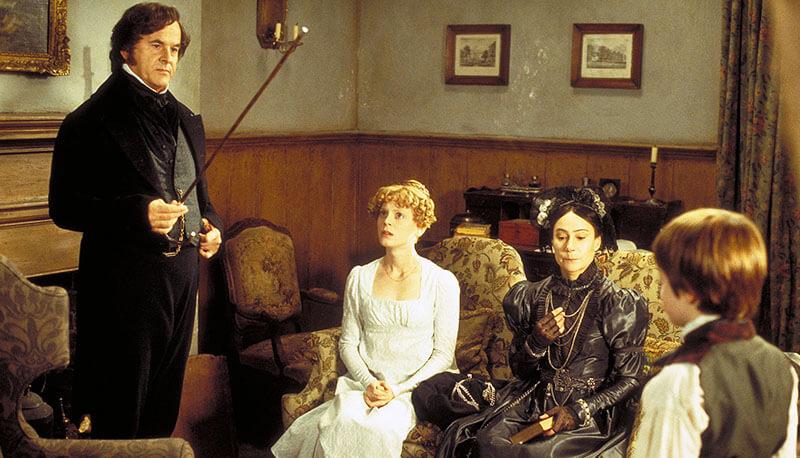 The novels are setted in London. Dickens conformed the public taste. The result of his works was a critical attitude towards his society. In his maturity works he succeeded in drawing popular attention to public abuses, evils and wrongs by terrible and detailed descriptions of London misery.
Characterization of the Characters
CHARACTERS: he describe characters habits and language of the middle and lower class. The social peculiarity are ridiculed freely without sarcasm. He was on the side of the poor, the outcast and the working class. Realistic upper middle class world was replaced by the one of the lower orders.
DAVID COPPERFIELD:David tells the story of his life when he is yet old. The story should be divided in 3 parts:
1. his childhood starting with his birth in Blunderstone and ending when he completes his time at Strong’s school in Canterbury.
2. His latter youth from his looking for a career and to the death of his first wife Dora.
3. His maturity ending with the marriage to Agnes Wickfield and happy life afterwards.
David starts life in an immature and ineffectual mother and his nurse. This condition is destroyed by the arrivals of his cruel stepfather Mr. Murdstone and his sister Jane. David is sent to Salem House, a school far from his house. Here he is tormented by Mr. Creackle, the headmaster. After his mother’s death he went to a wine factory in London where he works hardly. He lives with the family of Mr. Micawber that will be imprisoned for debt. Running away from this fate, David decided to reach his aunt Betsey in Dover. She brings him up. He concluded the studies and became a parliamentary reporter. Later he becomes a successful writer. He makes a disastrous marriage with Dora that death. After a bad period he married with Agnes and lives happily ever after.
Narrative Technique-> BILDUNGSROMAN: is a novel that follows the development of the hero from childhood into maturity, through a troubled quest of identity.
There is a strong emotional identification between Dickens and David. The characters are realistic and romantics.
THEMES:
• difficult to survive for poor people who are not helped by a cruel and competitive society
• strict education
• exploitation of children
• bad living conditions of the poor
• the important of social status (David improves his social conditions thanks to determination)
• the importance of friendship and love and other feelings.
Is David a hero?-> no, he isn’t in the ordinary sense of term, since he is not a primary example of integrity who by brave action and spiritual example defeats the force of evil.
His lack of discipline, romanticism and self-deception lead him to disaster. However he may be regarded as an hero because he evolved his identity and character and learns to improve himself and change through suffering and difficulties.
Uriah Heep and Educational Objective
URIAH HEEP->bad character of this novels, he is described by David as an evil person, unable to smile, with repellent movements. His sinister outward traits are synonyms of depravity. Uriah hates David because he is the embodiment of what he might have been; Davis’s attraction to Uriah is the human attraction to evil.
A DIDACTIC AIM->He portrayed several children good, wise children as opposed to worthless parents and other grown-up persons. Children are the moral teachers instead of the taught. Children are described in a way, they are more positive then adults. Dickens’s task was never to induce the most wronged and suffering to rebel but to get the common intelligence of the country to alleviate their suffering. He doesn’t want to push poor people to rebel, he only wants to help them.
Style and Reputation
STYLE AND REPUTATION-> he uses as careful choice of adjectives, repetitions of words and structures, juxtapositions of images and ideas, hyperbolic and ironic remarks.
“FOG IN LONDON”
Fog and mud are here the sombre symbols of the court of Chancery and its procedures.
Dickens had served as reporter in his youth and he had come to know the inefficiency and injustice of this institution.
In the some way as the fog cover the islets and the city, the Court of Chancery is blind and obscure.
Anyway there is a comic side: how people walked, denounce think not
good also if he saw the comic side of this way of living.
The humour of this episode is in the fact that everyone is in good faith:
Mrs. Bardell who has long worshipped Mr. Pickwick, really believes he is proposing to her.
The man is bewildered when she put her arms round his neck.
His 3 friends imagine they’ve interrupted a tender love-scene, and only the reader knows what has really happened.
It’s a misunderstanding based on the incommunicability of the two characters, each following their intention.
Domande da interrogazione
- How did Charles Dickens' early life influence his literary works?
- What are some key themes explored in Dickens' novels?
- How does Dickens portray characters in his novels?
- What narrative technique is used in "David Copperfield," and how does it reflect Dickens' style?
- What is Dickens' approach to social issues in his writing?
Dickens' unhappy childhood, marked by his father's imprisonment for debt and his own labor in a factory, inspired much of the content in his novels, reflecting themes of suffering and social injustice.
Dickens' novels often explore themes such as the struggle for survival among the poor, strict education, child exploitation, poor living conditions, social status, and the importance of friendship and love.
Dickens vividly describes the habits and language of the middle and lower classes, often ridiculing social peculiarities without sarcasm, and aligns himself with the poor and working class.
"David Copperfield" employs the Bildungsroman technique, following the protagonist's development from childhood to maturity, reflecting Dickens' emotional identification with the character and his realistic yet romantic portrayal.
Dickens aimed to draw attention to public abuses and societal wrongs through detailed descriptions of misery, using his works to encourage societal change rather than incite rebellion among the oppressed.



 Accedi a tutti gli appunti
 Tutor AI: studia meglio e in meno tempo


