


Concetti Chiave
- Robinson Crusoe is a spiritual autobiography by Daniel Defoe, focusing on themes of destiny and identity.
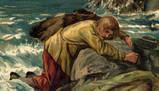
- The protagonist, Robinson, becomes shipwrecked on a desert island for 28 years, where he attempts to replicate his home country.
- Robinson encounters cannibals and rescues captives, including a man he names Friday, highlighting themes of civilization and savagery.
- The novel explores the relationship between the individual and society, emphasizing the influence of 18th-century English values.
- The story concludes with Robinson's wealth and return to England, showcasing themes of personal growth and divine intervention.
Robinson Crusoe is a spiritual autobiography* written by Daniel Defoe, published in 1719.
The main character is
Life on the Deserted Island
There he becomes the owner of a plantation and to get more slaves he sets a voyage to Africa, where he is shipwrecked on a desert island for 28 years. During this period he writes a diary where he tells his experiences and he tries to make that land as his native country. After 12 years of solitude he meets some cannibals, so he decides to attack them twice but they escape and the first time they leave one of their captives, that he calls Friday, while the second time they leave two prisoners, one of whom is Friday’s father. The novel ends with Robinson Crusoe’s return to England thanks to the Brazilian plantation that makes him very rich.
Themes and Meanings of the Novel
The life of the guy on the island represent the theme of the relationships between the individual and society, in fact the society that Robinson creates can’t be an alternative to the English one but can represent the exaltation of the 18-century in England. Robinson’s attitude shows that God chooses people’s destiny but every person can change it through actions, in particular when he decides to find his very identity as an alternative to the middle-class’ works.
*because is full of references to God like when Robinson prays to God to be freed from sin rather than to be rescued from the island.
Domande da interrogazione
- What is the significance of Robinson Crusoe's time on the deserted island?
- How does Robinson Crusoe's encounter with the cannibals impact the story?
- What role does spirituality play in Robinson Crusoe's journey?
Robinson Crusoe's time on the deserted island highlights the theme of individual versus society. His efforts to recreate society on the island reflect the values of 18th-century England and demonstrate the idea that while God may choose one's destiny, individuals have the power to change it through their actions.
Crusoe's encounters with the cannibals lead to significant developments in the story, including the introduction of Friday, a captive left behind by the cannibals. This relationship adds depth to the narrative and illustrates themes of companionship and cultural exchange.
Spirituality is a key element in Robinson Crusoe's journey, as the novel is considered a spiritual autobiography. Crusoe frequently references God, praying for freedom from sin rather than just rescue from the island, which underscores the novel's exploration of faith and personal redemption.



 Accedi a tutti gli appunti
 Tutor AI: studia meglio e in meno tempo


