


Concetti Chiave
- "Robinson Crusoe" is inspired by the real-life experience of Alexander Selkirk, a Scottish sailor who survived alone on a deserted island for several years.
- Robinson Crusoe's character is marked by a quest for identity, challenging the life path laid out by his father and reflecting the restlessness of classical travel literature heroes.
- The novel is rich in religious themes, portraying Crusoe's spiritual journey, rebellion, and eventual conversion, drawing parallels to the biblical parable of the prodigal son.
- Robinson exemplifies the English mercantile spirit, creating a primitive empire on the island that mirrors English societal ideals and highlights colonial themes through his relationship with Friday.
- Defoe explores the intersection of economic motivations and spiritual salvation, illustrating how Crusoe's actions on the island affirm his worthiness of God's Providence.
"Robinson Crusoe" is Dofoe's first novel and it is based on the real experience of Alexander Selkirk, a Scottish sailor who, from October 1704 to February 1709, managed to survive alone on the deser island of Juan Fernandes. Robinson Crusoe belongs to the middle class, which is praised by his father as "the best state in the world" and "the most suited to human happiness". What characterizes Robinson and associates him to the classical heroes of travel literature is his restlessness, the search for his own identity in alternative to the one provided by his father.
Religious References
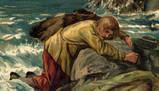
The novel contains many religious references to God, sin, Providence and salvation. It can be considered a spiritual autobiography: the protagounist reads the Bible to find comfort and guidance(Crusoe's own story can be considered, in some passage, similar to the parable of the prodigal son). The novel begins with Crusoe's rebellion against his father, which can also be read as an act of rebellion against God. Then he suffers a series of misfortunes that land him on the deserted island. Once there, he finally atones for his sins and undergoes a serious religious conversion. Crusoe experiences the costant conflict between good and evil, and keeps a diary to record events in order to see God's will in them. With "Robinson Crusoe" Defoe explores the conflict between economic motivation and spiritual salvation. The island is the perfect place for Robinson to prove his qualities and to demostrate that he deserves salvation and that he is worth of God's Providence. Dofoe shows that, thought God is the prime cause of everything , man can modify his destiny trought action.
English Mercantile Spirit
Robinson embodies the English mercantile spirit and is the archetype pioneer: he is armed with his own strenght and intelligence and has a Puritan's firm conviction that he has God on his side. On the island Robinson organises a primitive empire and becomes the prototype of the English coloniser: the society he creates on the island is not an alternative to the English one but, on the contrary, an exaltation of England and its ideals. Robinson is also the archetyper colonist: his relation with Friday portraits the one between colonist and native. Robinson's education of Friday closely recalls the processes of modern colonialism: Crusoe gives Friday a new name, meant to remind him of his debt to the white man; Robinson gives Friday European clothes; Robinson teaches Friday his language; Robinson teaches Friday the principles of Christianity; Robinson never gives Friday a weapon. So Robinson has a technical, linguistic and cultural advantage on Friday.
Domande da interrogazione
- In what ways does Robinson Crusoe embody the English mercantile spirit?
- How does Robinson Crusoe's relationship with his father influence his character development?
Robinson Crusoe exemplifies the English mercantile spirit through his self-reliance, intelligence, and Puritan belief in divine support. On the island, he establishes a primitive empire, reflecting the ideals of English society and becoming a prototype of the English colonizer. His interactions with Friday illustrate the dynamics of colonialism, emphasizing his technical, linguistic, and cultural superiority.
Crusoe's relationship with his father is pivotal, as his initial rebellion against his father's wishes symbolizes a broader rebellion against societal and divine expectations. This act sets the stage for his subsequent misfortunes and eventual spiritual awakening, driving his quest for identity and self-discovery beyond the middle-class values praised by his father.



 Accedi a tutti gli appunti
 Tutor AI: studia meglio e in meno tempo


