


Concetti Chiave
- The Aztecs were a nomadic people who settled in the Mexican plateau around the 13th century, eventually founding their capital, Tenochtitlán.
- The Aztec Empire was marked by a strong centralized power, with the King and a council of warrior nobles at the helm.
- Aztec society was structured like a pyramid, with a hierarchy from kings to slaves, and subjugated peoples were required to pay tribute.
- The Aztecs were polytheistic, with gods linked to animals and natural phenomena, and they practiced elaborate ceremonies for life events.
- Wars were often fueled by the need for human sacrifices, with victims offered to the gods to maintain cosmic order.
Aztecs
Indice
Origins and Settlement of the Aztecs
The Aztecs were a nomadic people who around the 13th century settled on the plateau of Mexico, where previously the Toltecchi had settled. They were the last people to settle in Central America. Subdued local people due to their military and organisational superiority, but suffered the influence of cultures that flourished over the centuries.
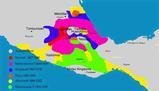
Around 1300 they founded their capital"Tenochtitlàn" built with intelligent urban solutions. From here they began expanding into neighboring regions and came to dominate much of the region.
The Aztec Empire was marked by a strong central power exercised by the King and by a Council of nobles of warrior ancestry.
The society was organized in pyramid manner: below the Kings were priests, nobility, free, and finally the servants and slaves. Subjugated peoples the Aztecs had to pay tribute and choose its victims to be sent to the sacrifices: the hardness of Aztec domination caused several revolts and eventually the subject peoples helped Cortés to demolish the reign of Montezuma the II, the last King.
Religion and Human Sacrifices
The Aztecs were polytheists: their Gods, particularly numerous, were identified with animals or with natural phenomena such as the Sun.
The Aztecs felt the continued presence of the gods: every moment of life (birth, adulthood, marriage, death) was marked by ceremonies. Human sacrifices had particular importance to the Aztecs: according to their myths, in fact, the ancient gods had sacrificed to keep the cosmos in order and do not slip back into chaos. Nevertheless, men were required to contribute for the stability of the world.
Wars and Ritual Sacrifices
The Need to find victims to sacrifice was among the reasons which led the Aztecs to war: were the favorite offers were prisoners. Often they were organized between the same sacred Aztec war whose end was not the killing of enemies but the sacrifice of the defeated.
The victims were thrown into the fire, but the more usual sacrifice was done by priests on the sacred pyramids severely slashing his chest to the victim, ripping out the heart and doing the blood dripping down the steps. These rites caused great impression on Spaniards, who felt compelled to defeat and kill the people who had so barbarous customs
Domande da interrogazione
- What were the origins and settlement patterns of the Aztecs?
- How was Aztec society structured, and what role did subjugated peoples play?
- What was the significance of religion and human sacrifices in Aztec culture?
The Aztecs were a nomadic people who settled on the plateau of Mexico around the 13th century, following the Toltecchi. They established their capital, Tenochtitlán, around 1300 and expanded into neighboring regions, dominating much of Central America due to their military and organizational superiority.
Aztec society was organized in a hierarchical pyramid with the King at the top, followed by priests, nobility, free citizens, and finally servants and slaves. Subjugated peoples were required to pay tribute and provide victims for sacrifices, which led to revolts and eventually aided Cortés in overthrowing Montezuma II, the last Aztec King.
The Aztecs were polytheists who believed in numerous gods associated with animals and natural phenomena. Human sacrifices were crucial, as they believed these rituals were necessary to maintain cosmic order. Wars were often waged to capture prisoners for sacrifice, a practice that shocked the Spaniards and contributed to their resolve to conquer the Aztecs.



 Accedi a tutti gli appunti
 Tutor AI: studia meglio e in meno tempo


