


Concetti Chiave
- George III's reign was notable for his efforts to strengthen the monarchy and significant events like the French Revolution, which led to Britain's naval confrontation with France, highlighted by Admiral Horatio Nelson's victory.
- The Industrial and Agricultural Revolutions marked a transformative period with technological advancements like the steam engine, impacting production, trade, and societal structures, creating a divide between the industrial class and laborers.
- Industrialism brought severe social challenges, including poor working conditions, urban overcrowding, pollution, and a high unemployment rate, exacerbating the plight of the working class.
- The American Revolution stemmed from colonial grievances over taxation without representation, leading to the Declaration of Independence in 1776 and the subsequent recognition of the United States' independence by England in 1783.
- Literary production during this era transitioned from Classicism to Romanticism, emphasizing individualism, emotion, and nature, moving away from the rationalism and order of previous periods.
Indice
The Ascension of George III
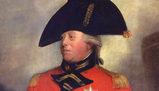
George III, George II's grandson, came to the throne in 1760. In order to recover the powers of the crown, he made the Prime Minister and the Cabinet instruments of the king's will. His reign was marked by important events:
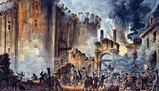
The French Revolution: it affected Europe politically and intellectually. In Britain there were different reactions: while the ruling classes were seized by the terror of “Jacobinism”, the intellectuals supported the Revolution. This revolution was followed by Napoleon's ascent. In 1793 France declared war on Britain, who decided to fight France at sea, relying on its strong navy. The hero of the navy was Admiral Horatio Nelson, who defeated the French fleet off Cape Trafalgar. Napoleon was finally defeated in 1805.
Industrial and Agricultural Revolutions
The Industrial and Agricultural Revolutions: in this period there were a series of economic and technical changes known as the First Industrial Revolution. It originated from the slow improvements and innovations of previous centuries, like the earlier developments in agricultural techniques; the creation of an overseas empire capable of providing raw materials; the availability of capital; the development of trade; the growth in population and the demand for greater production; the scientific progress which paved the way for the introduction of mechanization. The beginning of the industrial era was marked by the invention of machines (e.g. the steam engine, weaving machines...) which destroyed the old domestic production system and introduced the methods of factory production. There were also transport improvements: building of new waterways and railways, improvement of roads conditions. Consequently goods were cheaper; the volume of exports rose quickly, the population increased and wealth was rapidly accumulated by the upper and middle classes. Technological changer affected also agriculture, thanks to new scientific techniques and the introduction of new agricultural machinery. Both revolution required financial support, so the ones who invested their money became important in economic life. Therefore, society began to be marked by a deep social division: on one side the bank-financed industrial class and on the other the labour, made up of underpaid workers.
Social Impacts of Industrialism
Industrialism also had its negative social implications: men, women and children worked in terrible conditions; industrial cities were overcrowded and lacked elementary public services; the air and the water were polluted; the rate of unemployment was high.
American Revolution: the Americans weren't represented in the English Parliament and taxes could be imposed on them without their consent. In 1773 some rebels in Boston threw a large quantity of tea into the harbour (an event later called “The Boston tea party”), to protest against the tax England imposed on tea. Other twelve colonies supported Massachusetts in its refusal to be taxed by the English Parliament and asked England to withdraw its garrison. Thus war broke out in 1775. George Washington was commander-in-chief of the American army. On July 4 1776 representatives of the thirteen colonies met in Philadelphia and declared thei independence. The Declaration of Independence was drown up by a Committee headed by Thomas Jefferson, in affirmed the natural right of peoples to choose their own system of government. With the Treaty of Versailles (1783) England aknowledged the independence of the United States of America.
Literary Production
Literary Production and Classicism
The literary production of this time was influenced by the social and political conditions of the age.
New themes appeared along wiith the old ones, together with a new attitude which preferred sentimentalism and imagination to realism and rationalism. This period is called “The Age of Tranzition, usually divided into two periods: the Twilight of Classicism and Early Romanticism.
1. The twilight of Classicism.
It began more or less by 1770. Even if there was still an emphasis on reason, precision, order, clarity and harmony, new trends developed.
Nature began to be approached in a new way: it lost any abstract connotation and started to be seen as something real; it wasn't a “machine” functioning according to set principles but it was considered an existence of its own.
The countryside became the ideal setting of poets, poetry started to be pervaded by melancholy, with an emphasis on intimate feelings. Thus the “The Age of Reason” turned into an “Age of Sensibility”, dominated by a new interest in nature.
The way was now open for the discovery of new poetic forms which could better express the emphasis on individualism and imagination.
Poetry was perhaps the branch ol literature in which the conflict between intellect and emotion was most evident in the middle of 18 century. Poets gradually started to feel a sense of dissatisfaction with the traditional Augustan taste, turning to a more intimate poetry. They looked for relief or escape in nature or in the humble life of country people, rediscovering the pleasures of meditation. The sense of melancholy brought to an interest in death, ruins, deserted places, night scenes and tombs.
2.
Romanticism and Pre-Romanticism
Early Romanticism.
The term “Early Romanticism” or “Pre-romanticism” in itself is vague. It's applied to authors who first reacted against neoclassicism with their innovations and experiments. Some critics consider it a trend more than current, as it lacked a precise programme and rules.
The “pre-romantics” shared a common distaste for the artificiality, conventional formality and intellectual elegance of the Augustans; they opposed immagination to realism, feeling to reason, pathos to common sense. They looked for new forms of expression, motivated by their desire to give voice to the part of the human being which had been suppressed by reason.
Domande da interrogazione
- How did George III attempt to recover the powers of the crown during his reign?
- What were the key factors that contributed to the First Industrial Revolution?
- What were the social impacts of industrialism during George III's reign?
- How did the American Revolution unfold and what was its outcome?
- How did literary production evolve during the Age of Transition?
George III sought to recover the powers of the crown by making the Prime Minister and the Cabinet instruments of the king's will, marking his reign with significant political maneuvers.
The First Industrial Revolution was driven by improvements in agricultural techniques, the creation of an overseas empire, availability of capital, trade development, population growth, and scientific progress, leading to mechanization and factory production.
Industrialism led to negative social implications, including terrible working conditions for men, women, and children, overcrowded industrial cities lacking public services, pollution, and high unemployment rates.
The American Revolution began with the Boston Tea Party protest against taxation without representation, leading to war in 1775. The Declaration of Independence was issued in 1776, and with the Treaty of Versailles in 1783, England acknowledged the independence of the United States.
During the Age of Transition, literary production shifted from Classicism to Early Romanticism, emphasizing sentimentalism and imagination over realism and rationalism, with a new interest in nature, individualism, and emotional expression.



 Accedi a tutti gli appunti
 Tutor AI: studia meglio e in meno tempo


