


Concetti Chiave
- The US government is structured on inherent rights, self-government, and separation of powers among legislative, executive, and judicial branches.
- Congress, comprising the Senate and House of Representatives, holds legislative power; both houses must approve new laws, with the Senate being more powerful.
- The President serves as head of state, armed forces, and federal government, representing the country globally and appointing key officials.
- The Supreme Court, consisting of nine judges appointed by the President, ensures laws and presidential actions align with the Constitution.
- The system of checks and balances maintains equilibrium among branches, preventing power concentration through mutual oversight and authority limits.
Fundamental Principles of the US Government
US government is based on three principles: inherent rights, self government and separation of powers into legislative, executive and judicial. Legislative power is exercised by Congress, executive power is exercised by President and judicial power is exercised by Federal court judges. No branch has more power than the other through a system of checks and balances.
Congress consists of two houses: Senate and House of Representatives. In the Senate there are 100 members elected every two years from each state regardless of its size and population. In the House of Representatives there are 435 members elected every two years from state congressional districts. The Senate is more powerful than the House. Every new law must have the approval of both houses of Congress and the signature of the president.
Role of the President
The president is head of state, of the armed forces and of the federal government. For this the president represents the country abroad, he can send the military on missions and he appoints all important officials, including the members of the cabinet. 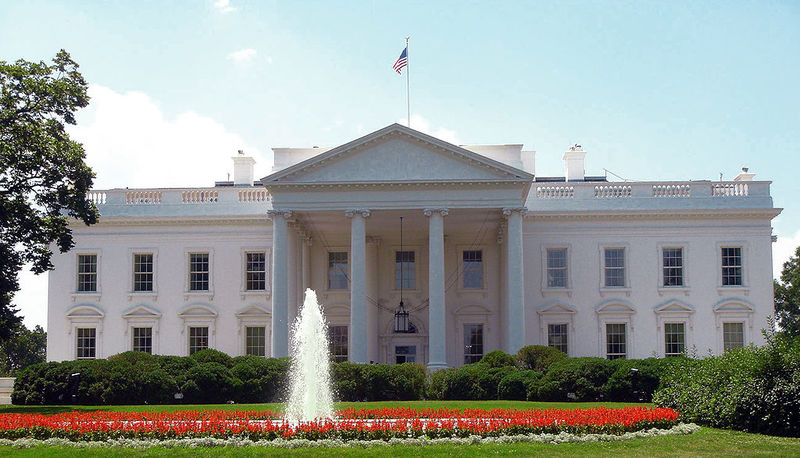 The president is elected from the people every four years and he can serve two 4-years terms.
The Supreme Court consists of nine judges who are appointed by the president, with the Senate approval. It defends and interprets US constitution. Its main function are: check that actions by the president and laws passed by Congress or state legislatures are constitutional; ensure that there is a correct balance between the other powers.
System of Checks and Balances
It was agreed that no branch would have more power than the other and it is possible through the system of checks and balances. In this system each branch operates independently of the others but there are built in “checks and balances” to prevent tyrannous concentration of power in any one branch. For example, the President can veto bills approved by Congress and the President nominates individuals to serve in the Federal judiciary; the Supreme Court can declare a law enacted by Congress or an action by the President unconstitutional; and Congress can impeach the President and Federal court judges.
Domande da interrogazione
- What are the fundamental principles that form the basis of the US government?
- How does the system of checks and balances function within the US government?
- What roles and powers does the President of the United States hold?
The US government is founded on three core principles: inherent rights, self-government, and the separation of powers into legislative, executive, and judicial branches. Each branch operates independently but is balanced by a system of checks and balances to prevent any one branch from gaining excessive power.
The system of checks and balances ensures that no branch of government becomes too powerful. For instance, the President can veto bills from Congress, the Supreme Court can declare laws unconstitutional, and Congress can impeach the President and Federal judges, maintaining a balance of power among the branches.
The President serves as the head of state, the armed forces, and the federal government. Responsibilities include representing the country internationally, deploying the military, and appointing key officials, including cabinet members. The President is elected every four years and can serve a maximum of two terms.




 Accedi a tutti gli appunti
 Tutor AI: studia meglio e in meno tempo


