


Concetti Chiave
- The term "Eskimo," meaning 'raw meat eaters,' was replaced by "Inuit," signifying 'the people.'
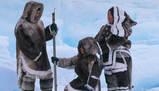
- Inuit were nomadic, living in hunting groups and utilizing animal skins and fur for clothing.
- They adapted to harsh climates, relying on dried fish, seal meat, and hunting caribou for sustenance.
- Inuit winter shelters included stone or whalebone huts and snow houses, while summer homes were seal or walrus skin tents.
- Transportation varied with seasons; sledges and dog teams in winter, and kayaks and umiaks for summer and water travel.
Origins and meaning of the name
The Inuit used to be called Eskimo. This meant ‘raw meat eaters’, because they often ate raw or frozen meat and fish. The name Inuit means ‘the people’. The Inuit of Canada were nomadic. They lived in small hunting groups and wore clothes made of animal skins and fur. They lived in a part of Canada which is frozen for most of the year. No trees grow there. In winter, the Inuit ate dried fish and fresh seal meat. A hunter waited for hours beside a seal’s breathing hole in the ice. When a seal came up for air, he quickly speared it. In summer, the Inuit fished in the sea or in the rivers, and they hunted the caribou which crossed their land. They gathered berries and plants. It was too cold to grow fruit and vegetables. In the long, cold winters, the Inuit lived in a hut made of stone or whalebone covered with turf, or in a snow house. The snow houses were partly underground. To get into them, the Inuit had to crawl along a tunnel. The home was heated and lit by lamps burning whale or seal oil. In the short summer, an Inuit family lived in a tent made of seal or walrus skins.
Traditional means of transport
In winter, the Inuit travelled on sledges, pulled by dogs. in summer, when the ice melted, they walked. They travelled on the water in kayaks. These small boats were made of driftwood and covered with caribou or seal skin to make them waterproof. They were light and could be carried easily. For whaling or transportation, the Inuit used a bigger boat called an umiak.
Domande da interrogazione
- What does the name "Inuit" signify and how does it differ from "Eskimo"?
- How did the Inuit adapt their living arrangements to the harsh Arctic environment?
- What were the traditional modes of transportation for the Inuit throughout the seasons?
The name "Inuit" means "the people," contrasting with "Eskimo," which meant "raw meat eaters," reflecting their diet of raw or frozen meat and fish.
The Inuit lived in stone or whalebone huts covered with turf or snow houses in winter, heated by whale or seal oil lamps. In summer, they used tents made of seal or walrus skins.
In winter, the Inuit used dog-pulled sledges, while in summer, they walked and traveled on water using kayaks and larger umiaks for whaling or transportation.



 Accedi a tutti gli appunti
 Tutor AI: studia meglio e in meno tempo


